
Available options are listed below:
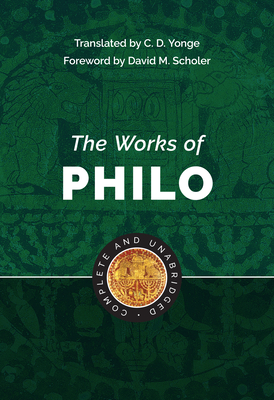
Works of Philo $$ (Out of print)
| AUTHOR | Philo, Judaeus; Philo, Charles Duke; Yonge, C. D. |
| PUBLISHER | Hendrickson Publishers (10/01/1991) |
| PRODUCT TYPE | Hardcover (Hardcover) |
While it would not be correct to say that Philo's works have been "lost"--scholars have always known and used Philo--they have essentially been "misplaced" as far as the average student of the Bible is concerned. Now the translation of the eminent classicist C. D. Yonge is available in an affordable, easy-to-read edition, with a new foreword and newly translated passages, and containing supposed fragments of Philo's writings from ancient authors such as John of Damascus. The title and arrangement of the writings have been standardized according to scholarly conventions.
A contemporary of Paul and Jesus, Philo Judaeus, of Alexandria, Egypt, is unquestionably among the most important writers for historians and students of Hellenistic Judaism and early Christianity. Although Philo does not explicitly mention Jesus, or Paul, or any of the followers of Jesus, Philo lived in their world. It is from Philo, for example, that we learn about how, like the Gospel of John, Jews (and Greeks) in the Greco-Roman world spoke of the creative force of God as God's "Logos." Philo, too, employs interpretive strategies that parallel those of the author of Hebrews. Most scholars would agree that Philo and the author of Hebrews are drawing from the same, or at least similar, traditions of Hellenistic Judaism. With these kind of connections to the world of Judaism and early Christianity, Philo cannot be ignored.
While it would not be correct to say that Philo's works have been "lost"--scholars have always known and used Philo--they have essentially been "misplaced" as far as the average student of the Bible is concerned. Now the translation of the eminent classicist C. D. Yonge is available in an affordable, easy-to-read edition, with a new foreword and newly translated passages, and containing supposed fragments of Philo's writings from ancient authors such as John of Damascus. The title and arrangement of the writings have been standardized according to scholarly conventions.
A contemporary of Paul and Jesus, Philo Judaeus, of Alexandria, Egypt, is unquestionably among the most important writers for historians and students of Hellenistic Judaism and early Christianity. Although Philo does not explicitly mention Jesus, or Paul, or any of the followers of Jesus, Philo lived in their world. It is from Philo, for example, that we learn about how, like the Gospel of John, Jews (and Greeks) in the Greco-Roman world spoke of the creative force of God as God's "Logos." Philo, too, employs interpretive strategies that parallel those of the author of Hebrews. Most scholars would agree that Philo and the author of Hebrews are drawing from the same, or at least similar, traditions of Hellenistic Judaism. With these kind of connections to the world of Judaism and early Christianity, Philo cannot be ignored.