
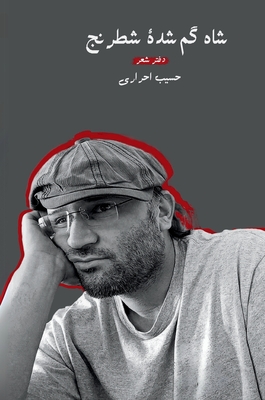
Shah Gomshoda-ye Shatranj
| AUTHOR | Ahrari, Hasib |
| PUBLISHER | Barmakids Press (04/01/2025) |
| PRODUCT TYPE | Hardcover (Hardcover) |
Sh?h-e Gomshuda-ye Shatranj (The Lost King of Chess) by the seasoned poet from Afghanistan Hasib Ahrari, is a masterful collection of Persian poetry that bridges classical themes with contemporary reflections. Ahrari weaves intricate imagery with philosophical depth, creating a tapestry of emotions and insights that resonate with readers from all walks of life.
Spanning over 500 pages, this powerful and deeply evocative work is divided into five distinct sections:
*Ghazals (Ghazal-h?): This traditional lyrical poems are rich with emotion and philosophical depth that challenges religious hypocrisy, and are marked by sharp irony, fearless critique of clerics and institutions.
*Incomplete Ghazals (N?takm?l Ghazal-h?): These are fragmented yet resonant verses that offer glimpses into unfinished thoughts and open-ended longing, where the emotional momentum is considered more relevant than structured closure.
*Single Verses (Tak-Bayt-h?): Standalone couplets are marked by their brevity, depth, and immediacy, distilling profound reflections into compact yet resonant poetic expressions.
*Do-Baytis and Rub??iy?t (Do-Bayt?-h? va Rub??iy?t): Classical four-line verses that reflect themes from mysticism and social criticism to romantic longing.
*Nim?'? and Free Verse Poems (N?m?? va Sep?d-Sor?d-h?): The last section covers modern, unbound poems free in form but deliberate in rhythm.
The Lost King of Chess is both a personal testament and a poetic mirror of a generation shaped by displacement and resilience. It is a book that speaks to the soul with sorrow, beauty, and
Sh?h-e Gomshuda-ye Shatranj (The Lost King of Chess) by the seasoned poet from Afghanistan Hasib Ahrari, is a masterful collection of Persian poetry that bridges classical themes with contemporary reflections. Ahrari weaves intricate imagery with philosophical depth, creating a tapestry of emotions and insights that resonate with readers from all walks of life.
Spanning over 500 pages, this powerful and deeply evocative work is divided into five distinct sections:
*Ghazals (Ghazal-h?): This traditional lyrical poems are rich with emotion and philosophical depth that challenges religious hypocrisy, and are marked by sharp irony, fearless critique of clerics and institutions.
*Incomplete Ghazals (N?takm?l Ghazal-h?): These are fragmented yet resonant verses that offer glimpses into unfinished thoughts and open-ended longing, where the emotional momentum is considered more relevant than structured closure.
*Single Verses (Tak-Bayt-h?): Standalone couplets are marked by their brevity, depth, and immediacy, distilling profound reflections into compact yet resonant poetic expressions.
*Do-Baytis and Rub??iy?t (Do-Bayt?-h? va Rub??iy?t): Classical four-line verses that reflect themes from mysticism and social criticism to romantic longing.
*Nim?'? and Free Verse Poems (N?m?? va Sep?d-Sor?d-h?): The last section covers modern, unbound poems free in form but deliberate in rhythm.
The Lost King of Chess is both a personal testament and a poetic mirror of a generation shaped by displacement and resilience. It is a book that speaks to the soul with sorrow, beauty, and