
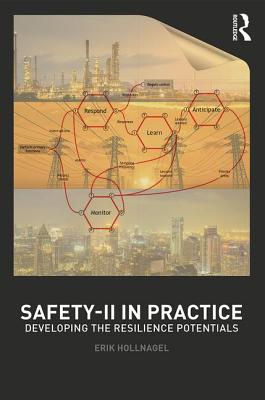
Safety-II in Practice: Developing the Resilience Potentials
| AUTHOR | Hollnagel, Erik |
| PUBLISHER | Routledge (06/21/2017) |
| PRODUCT TYPE | Paperback (Paperback) |
Safety-I is defined as the freedom from unacceptable harm. The purpose of traditional safety management is therefore to find ways to ensure this 'freedom'. But as socio-technical systems steadily have become larger and less tractable, this has become harder to do. Resilience engineering pointed out from the very beginning that resilient performance - an organisation's ability to function as required under expected and unexpected conditions alike - required more than the prevention of incidents and accidents. This developed into a new interpretation of safety (Safety-II) and consequently a new form of safety management.
Safety-II changes safety management from protective safety and a focus on how things can go wrong, to productive safety and a focus on how things can and do go well. For Safety-II, the aim is not just the elimination of hazards and the prevention of failures and malfunctions but also how best to develop an organisation's potentials for resilient performance - the way it responds, monitors, learns, and anticipates. That requires models and methods that go beyond the Safety-I toolbox. This book introduces a comprehensive approach for the management of Safety-II, called the Resilience Assessment Grid (RAG). It explains the principles of the RAG and how it can be used to develop the resilience potentials. The RAG provides four sets of diagnostic and formative questions that can be tailored to any organisation. The questions are based on the principles of resilience engineering and backed by practical experience from several domains.
Safety-II in Practice is for both the safety professional and academic reader. For the professional, it presents a workable method (RAG) for the management of Safety-II, with a proven track record. For academic and student readers, the book is a concise and practical presentation of resilience engineering.
Safety-I is defined as the freedom from unacceptable harm. The purpose of traditional safety management is therefore to find ways to ensure this 'freedom'. But as socio-technical systems steadily have become larger and less tractable, this has become harder to do. Resilience engineering pointed out from the very beginning that resilient performance - an organisation's ability to function as required under expected and unexpected conditions alike - required more than the prevention of incidents and accidents. This developed into a new interpretation of safety (Safety-II) and consequently a new form of safety management.
Safety-II changes safety management from protective safety and a focus on how things can go wrong, to productive safety and a focus on how things can and do go well. For Safety-II, the aim is not just the elimination of hazards and the prevention of failures and malfunctions but also how best to develop an organisation's potentials for resilient performance - the way it responds, monitors, learns, and anticipates. That requires models and methods that go beyond the Safety-I toolbox. This book introduces a comprehensive approach for the management of Safety-II, called the Resilience Assessment Grid (RAG). It explains the principles of the RAG and how it can be used to develop the resilience potentials. The RAG provides four sets of diagnostic and formative questions that can be tailored to any organisation. The questions are based on the principles of resilience engineering and backed by practical experience from several domains.
Safety-II in Practice is for both the safety professional and academic reader. For the professional, it presents a workable method (RAG) for the management of Safety-II, with a proven track record. For academic and student readers, the book is a concise and practical presentation of resilience engineering.