
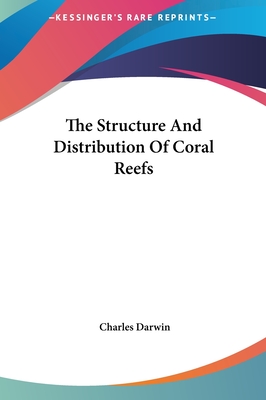
The Structure And Distribution Of Coral Reefs
| AUTHOR | Darwin, Charles |
| PUBLISHER | Kessinger Publishing (05/23/2010) |
| PRODUCT TYPE | Hardcover (Hardcover) |
Description
The Structure and Distribution of Coral Reefs is a scientific book written by Charles Darwin in 1842. In this book, Darwin presents his observations and theories on the formation and distribution of coral reefs. He argues that coral reefs are not static structures but are constantly evolving and changing due to geological and biological processes.The book is divided into three parts. In the first part, Darwin describes the different types of coral reefs and the conditions that are required for their formation. He also discusses the different stages of reef formation and the role of coral polyps in this process.In the second part, Darwin presents his observations on the distribution of coral reefs around the world. He argues that the distribution of coral reefs is not random but is influenced by a variety of factors, including water temperature, depth, and the presence of other organisms.In the third part, Darwin discusses the implications of his theories for the study of geology and biology. He argues that the study of coral reefs can provide important insights into the history of the earth and the evolution of life on our planet.Overall, The Structure and Distribution of Coral Reefs is a seminal work in the history of science and a testament to Darwin's keen observational skills and groundbreaking theories. It remains an important reference for scientists and scholars interested in the study of coral reefs and their role in the ecology of our planet.Where the channel is narrow, the agency, which on unprotected coasts is most productive of sediment, namely the force of the breakers, is here entirely excluded, and the reef being breached in the front of the main valleys, much of the finer mud from the rivers must be transported into the open sea. As a current is formed by the water thrown over the edge of atoll-formed reefs, which carries sediment with it through the deep-water breaches.This scarce antiquarian book is a facsimile reprint of the old original and may contain some imperfections such as library marks and notations. Because we believe this work is culturally important, we have made it available as part of our commitment for protecting, preserving, and promoting the world's literature in affordable, high quality, modern editions, that are true to their original work.
Show More
Product Format
Product Details
ISBN-13:
9781161478389
ISBN-10:
1161478388
Binding:
Hardback or Cased Book (Sewn)
Content Language:
English
More Product Details
Page Count:
206
Carton Quantity:
19
Product Dimensions:
7.00 x 0.50 x 10.00 inches
Weight:
1.27 pound(s)
Country of Origin:
US
Subject Information
BISAC Categories
Science | Philosophy & Social Aspects
Science | Ecology
Science | History
Descriptions, Reviews, Etc.
publisher marketing
The Structure and Distribution of Coral Reefs is a scientific book written by Charles Darwin in 1842. In this book, Darwin presents his observations and theories on the formation and distribution of coral reefs. He argues that coral reefs are not static structures but are constantly evolving and changing due to geological and biological processes.The book is divided into three parts. In the first part, Darwin describes the different types of coral reefs and the conditions that are required for their formation. He also discusses the different stages of reef formation and the role of coral polyps in this process.In the second part, Darwin presents his observations on the distribution of coral reefs around the world. He argues that the distribution of coral reefs is not random but is influenced by a variety of factors, including water temperature, depth, and the presence of other organisms.In the third part, Darwin discusses the implications of his theories for the study of geology and biology. He argues that the study of coral reefs can provide important insights into the history of the earth and the evolution of life on our planet.Overall, The Structure and Distribution of Coral Reefs is a seminal work in the history of science and a testament to Darwin's keen observational skills and groundbreaking theories. It remains an important reference for scientists and scholars interested in the study of coral reefs and their role in the ecology of our planet.Where the channel is narrow, the agency, which on unprotected coasts is most productive of sediment, namely the force of the breakers, is here entirely excluded, and the reef being breached in the front of the main valleys, much of the finer mud from the rivers must be transported into the open sea. As a current is formed by the water thrown over the edge of atoll-formed reefs, which carries sediment with it through the deep-water breaches.This scarce antiquarian book is a facsimile reprint of the old original and may contain some imperfections such as library marks and notations. Because we believe this work is culturally important, we have made it available as part of our commitment for protecting, preserving, and promoting the world's literature in affordable, high quality, modern editions, that are true to their original work.
Show More
Author:
Darwin, Charles
Charles Darwin was an English naturalist and author best-known for his revolutionary theories on the origin of species, human evolution, and natural selection. A life-long interest in the natural world led Darwin to neglect his medical studies and instead embark on a five-year scientific voyage on the HMS Beagle, where he established his reputation as a geologist and gathered much of the evidence that fuelled his later theories.A prolific writer, Darwin s most famous published works include The Voyage of the Beagle, On the Origin of Species, The Descent of Man, and Selection in Relation to Sex, and The Expression of Emotions in Man and Animals. Darwin died in 1882, and in recognition of his contributions to science, is buried in Westminster Abbey along with John Herschel and Isaac Newton.
Show More
List Price $41.95
Your Price
$41.53