
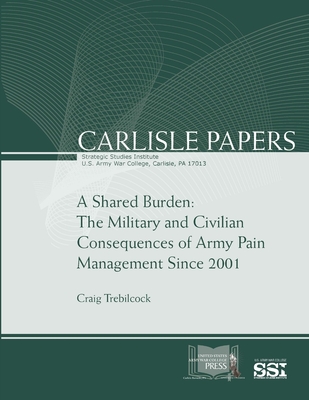
A Shared Burden: The Military and Civilian Consequences of Army Pain Management Since 2001
| AUTHOR | Army War College, U. S.; Institute, Strategic Studies; Trebilcock, Craig |
| PUBLISHER | Lulu.com (12/23/2015) |
| PRODUCT TYPE | Paperback (Paperback) |
Description
The Army has an opioid drug problem that is not going away under current personnel policies and medical practices. The survey results recorded here indicate that senior officers attending the U.S. Army War College (USAWC) recognize that the opioid problem is distinct in nature and origin from those of recreational drug abuse. Yet, these officers are saddled with a legacy drug enforcement structure and outdated procedures that do not track opioid usage across the force and do not address the root cause of the issue. They are commanding units under a regulatory structure that belatedly responds to opioid-related misuse with the same misconduct-focused disciplinary policies as those for recreational drug use, rather than with a proactive medical and personnel approach crafted for this unique problem set that emphasizes prevention and rehabilitation. The USAWC officer survey responses reflect the fact that the majority of these future Army leaders see misuse originating out of prescribing practices...
Show More
Product Format
Product Details
ISBN-13:
9781329783928
ISBN-10:
1329783921
Binding:
Paperback or Softback (Trade Paperback (Us))
Content Language:
English
More Product Details
Page Count:
40
Carton Quantity:
102
Product Dimensions:
8.50 x 0.08 x 11.00 inches
Weight:
0.26 pound(s)
Country of Origin:
US
Subject Information
BISAC Categories
Reference | General
Descriptions, Reviews, Etc.
publisher marketing
The Army has an opioid drug problem that is not going away under current personnel policies and medical practices. The survey results recorded here indicate that senior officers attending the U.S. Army War College (USAWC) recognize that the opioid problem is distinct in nature and origin from those of recreational drug abuse. Yet, these officers are saddled with a legacy drug enforcement structure and outdated procedures that do not track opioid usage across the force and do not address the root cause of the issue. They are commanding units under a regulatory structure that belatedly responds to opioid-related misuse with the same misconduct-focused disciplinary policies as those for recreational drug use, rather than with a proactive medical and personnel approach crafted for this unique problem set that emphasizes prevention and rehabilitation. The USAWC officer survey responses reflect the fact that the majority of these future Army leaders see misuse originating out of prescribing practices...
Show More
List Price $15.94
Your Price
$15.14