
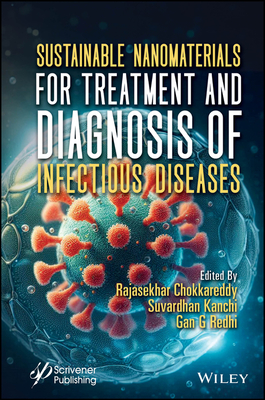
Sustainable Nanomaterials for Treatment and Diagnosis of Infectious Diseases
| PUBLISHER | Wiley-Scrivener (02/11/2025) |
| PRODUCT TYPE | Hardcover (Hardcover) |
Sustainable Nanomaterials for Treatment and Diagnosis of Infectious Diseases investigates the dynamic intersection of nanotechnology and healthcare, focusing on infectious diseases. The book conducts a thorough study of the current state of research and development in the field, providing important insights into the unique methods and technologies being deployed. Based on research from researchers and industry professionals, the book emphasizes research on sustainable nanomaterials within the broader framework of infectious disease management.
Key topics covered include nanomaterial synthesis and characterization using environmentally benign technologies, their application in infectious disease diagnostics, and their role in developing long-term therapeutic interventions. Additionally, other sections cover fundamental concepts, emerging concerns and challenges to combat infectious diseases, the characterization of nanomaterials for theranotic applications, and the toxicity, biocompatibility, and regulatory perspective in the diagnosis and treatment of infectious diseases.
The book focuses on the design and novel synthetic routes of sustainable nanomaterials in diagnosing and treating infectious diseases offering potential benefits in terms of efficiency, biocompatibility, and environmental impact.
The fifteen chapters in this book provide a comprehensive exploration of how sustainable nanotechnology can revolutionize infectious disease management and bridge the gap between the fundamental principles of nanotechnology and their practical applications in combating infectious diseases. Subjects covered include: the rise of multidrug-resistant pathogens and the limitations of existing therapies; the challenges of infectious disease management including the rise of multidrug-resistant pathogens and the limitations of existing therapies; nano-pharmacology and pharmacotherapeutics in the treatment of infectious diseases; the advancements in nanomaterial-based drug delivery systems, vaccines, and diagnostic tools, and the future of personalized medicine; nanotheranostic mechanisms outlining how nanomaterials can be engineered to simultaneously diagnose and treat infections; nano drug delivery systems that contribute to enhancing the efficacy and precision of treatment modalities; biocompatibility and toxicity of nanomaterials in the diagnosis and treatment of infectious diseases; regulatory perspectives of nanomaterials ensuring they meet safety and efficacy standards; green synthesis of reduced graphene oxide, carbon dots, and its composites for infectious diseases and biosurfactants; nanomaterials of polymeric design underscoring their potential to create more effective and sustainable therapeutic options; how nanomaterials can be engineered to simultaneously diagnose and treat infections.
Audience
The book targets nanotechnology researchers, scientists, and healthcare professionals interested in understanding nanotechnology's critical role in sustainable healthcare solutions.
Sustainable Nanomaterials for Treatment and Diagnosis of Infectious Diseases investigates the dynamic intersection of nanotechnology and healthcare, focusing on infectious diseases. The book conducts a thorough study of the current state of research and development in the field, providing important insights into the unique methods and technologies being deployed. Based on research from researchers and industry professionals, the book emphasizes research on sustainable nanomaterials within the broader framework of infectious disease management.
Key topics covered include nanomaterial synthesis and characterization using environmentally benign technologies, their application in infectious disease diagnostics, and their role in developing long-term therapeutic interventions. Additionally, other sections cover fundamental concepts, emerging concerns and challenges to combat infectious diseases, the characterization of nanomaterials for theranotic applications, and the toxicity, biocompatibility, and regulatory perspective in the diagnosis and treatment of infectious diseases.