
Forage Crops
| PUBLISHER | CRC Press (01/15/2009) |
| PRODUCT TYPE | Hardcover (Hardcover) |
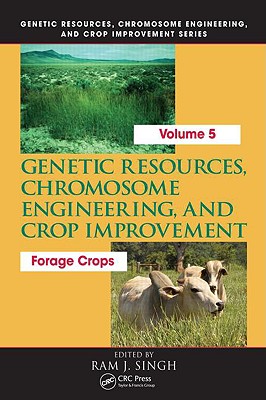
In recent decades, livestock producers have moved away from open grazing for a number of reasons, none having to do with the health of consumers. Genetic Resources, Chromosome Engineering, and Crop Improvement: Forage Crops demonstrates how state-of-the-art technology can encourage the raising of livestock in open pastures where they can be fed grasses grown in nature rather than meals enriched with hormones and other by-products.
The volume brings together the world's leading innovators in crop science who furnish information on the availability of germplasm resources that breeders can exploit for the improvement of major forage crop varieties including alfalfa, wheatgrass and wildrye grasses, Bahiagrass, birdsfoot trefoil, clover, Bermudagrass, and ryegrass.
An introductory chapter outlines the cytogenetic architecture of forage crops, describes the principles and strategies of cytogenetic and breeding manipulations, and summarizes landmark research. Ensuing chapters provide a comprehensive account of each crop: its origin; wild relatives; exploitation of genetic resources in the primary, secondary, and tertiary, and, where feasible, quarternary gene pools through breeding and cytogenetic manipulation; and genetic enrichment using the tools of molecular genetics and biotechnology.
. Certain to become the standard reference, this volume--
- Discusses taxonomy, genomic and chromosomal constitution, and the geographical distribution
- Stresses the role of germplasm exploration, maintenance, and assimilation for increasing yield
- Presents practical improvement methodologies including conventional, cytogenetic, mutation, molecular, cell and tissue cultures, and genetic transformation
In addition to serving as fodder, forage crops provide ground cover, aid in abetting erosions, yield a number of pharmaceuti
In recent decades, livestock producers have moved away from open grazing for a number of reasons, none having to do with the health of consumers. Genetic Resources, Chromosome Engineering, and Crop Improvement: Forage Crops demonstrates how state-of-the-art technology can encourage the raising of livestock in open pastures where they can be fed grasses grown in nature rather than meals enriched with hormones and other by-products.
The volume brings together the world's leading innovators in crop science who furnish information on the availability of germplasm resources that breeders can exploit for the improvement of major forage crop varieties including alfalfa, wheatgrass and wildrye grasses, Bahiagrass, birdsfoot trefoil, clover, Bermudagrass, and ryegrass.
An introductory chapter outlines the cytogenetic architecture of forage crops, describes the principles and strategies of cytogenetic and breeding manipulations, and summarizes landmark research. Ensuing chapters provide a comprehensive account of each crop: its origin; wild relatives; exploitation of genetic resources in the primary, secondary, and tertiary, and, where feasible, quarternary gene pools through breeding and cytogenetic manipulation; and genetic enrichment using the tools of molecular genetics and biotechnology.
. Certain to become the standard reference, this volume--
- Discusses taxonomy, genomic and chromosomal constitution, and the geographical distribution
- Stresses the role of germplasm exploration, maintenance, and assimilation for increasing yield
- Presents practical improvement methodologies including conventional, cytogenetic, mutation, molecular, cell and tissue cultures, and genetic transformation
In addition to serving as fodder, forage crops provide ground cover, aid in abetting erosions, yield a number of pharmaceuti