
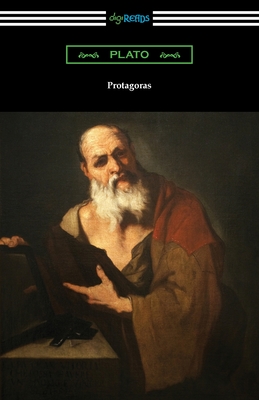
Protagoras
| AUTHOR | Jowett, Benjamin; Plato |
| PUBLISHER | Digireads.com (12/04/2021) |
| PRODUCT TYPE | Paperback (Paperback) |
Plato's "Protagoras" is a series of debates or arguments between Socrates and the elderly Protagoras, who was a well-known Sophist. Socrates was deeply critical of the Sophists, who were teachers or wise men who charged money for educating students and dispensing wisdom. He believed them to be corrupt and dangerous men who could lead their pupils astray. In Plato's dialogue, Socrates challenges Protagoras and his beliefs in front of an audience of nearly two dozen prominent Athenians, which includes both other Sophists and some of Socrates' friends from the Symposium. Socrates denies the Sophist belief that virtue and honor can be taught, as one would teach the ability to play an instrument, and sees it instead as an innate characteristic. Protagoras vigorously defends his work and contends that civic virtue, or the traits necessary to be a good citizen, is a skill that may be broken down and imparted to a young person the same as any other learned behavior may be. The two great philosophers also debate the meaning of a good life, the pursuit of pleasure, and the importance of wisdom in Plato's timeless and thought-provoking work. This edition is printed on premium acid-free paper and follows the translation of with an introduction by Benjamin Jowett.
Plato's "Protagoras" is a series of debates or arguments between Socrates and the elderly Protagoras, who was a well-known Sophist. Socrates was deeply critical of the Sophists, who were teachers or wise men who charged money for educating students and dispensing wisdom. He believed them to be corrupt and dangerous men who could lead their pupils astray. In Plato's dialogue, Socrates challenges Protagoras and his beliefs in front of an audience of nearly two dozen prominent Athenians, which includes both other Sophists and some of Socrates' friends from the Symposium. Socrates denies the Sophist belief that virtue and honor can be taught, as one would teach the ability to play an instrument, and sees it instead as an innate characteristic. Protagoras vigorously defends his work and contends that civic virtue, or the traits necessary to be a good citizen, is a skill that may be broken down and imparted to a young person the same as any other learned behavior may be. The two great philosophers also debate the meaning of a good life, the pursuit of pleasure, and the importance of wisdom in Plato's timeless and thought-provoking work. This edition is printed on premium acid-free paper and follows the translation of with an introduction by Benjamin Jowett.