
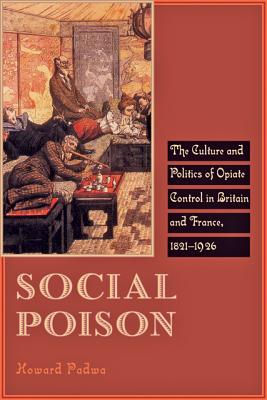
Social Poison: The Culture and Politics of Opiate Control in Britain and France, 1821-1926
| AUTHOR | Padwa, Howard |
| PUBLISHER | Johns Hopkins University Press (02/23/2012) |
| PRODUCT TYPE | Hardcover (Hardcover) |
This comparative history examines the divergent paths taken by Britain and France in managing opiate abuse during the late nineteenth and early twentieth centuries.
Though the governments of both nations viewed rising levels of opiate use as a problem, Britain and France took opposite courses of action in addressing the issue. The British sanctioned maintenance treatment for addiction, while the French authorities did not hesitate to take legal action against addicts and the doctors who prescribed drugs to them. Drawing on primary documents, Howard Padwa examines the factors that led to these disparate approaches. He finds that national policies were influenced by shifts in the composition of drug-using populations of the two countries and a marked divergence in British and French conceptions of citizenship.
Beyond shared concerns about public health and morality, Britain and France had different understandings of the threat that opiate abuse posed to their respective communities. Padwa traces the evolution of thinking on the matter in both countries, explaining why Britain took a less adversarial approach to domestic opiate abuse despite the productivity-sapping powers of this social poison, and why the relatively libertine French chose to attack opiate abuse. In the process, Padwa reveals the confluence of changes in medical knowledge, culture, politics, and drug-user demographics throughout the period, a convergence of forces that at once highlighted the issue and transformed it from one of individual health into a societal concern.
An insightful look at the development of drug discourses in the nineteenth century and drug policy in the twentieth century, Social Poison will appeal to scholars and students in public health and the history of medicine.
This comparative history examines the divergent paths taken by Britain and France in managing opiate abuse during the late nineteenth and early twentieth centuries.
Though the governments of both nations viewed rising levels of opiate use as a problem, Britain and France took opposite courses of action in addressing the issue. The British sanctioned maintenance treatment for addiction, while the French authorities did not hesitate to take legal action against addicts and the doctors who prescribed drugs to them. Drawing on primary documents, Howard Padwa examines the factors that led to these disparate approaches. He finds that national policies were influenced by shifts in the composition of drug-using populations of the two countries and a marked divergence in British and French conceptions of citizenship.
Beyond shared concerns about public health and morality, Britain and France had different understandings of the threat that opiate abuse posed to their respective communities. Padwa traces the evolution of thinking on the matter in both countries, explaining why Britain took a less adversarial approach to domestic opiate abuse despite the productivity-sapping powers of this social poison, and why the relatively libertine French chose to attack opiate abuse. In the process, Padwa reveals the confluence of changes in medical knowledge, culture, politics, and drug-user demographics throughout the period, a convergence of forces that at once highlighted the issue and transformed it from one of individual health into a societal concern.
An insightful look at the development of drug discourses in the nineteenth century and drug policy in the twentieth century, Social Poison will appeal to scholars and students in public health and the history of medicine.