
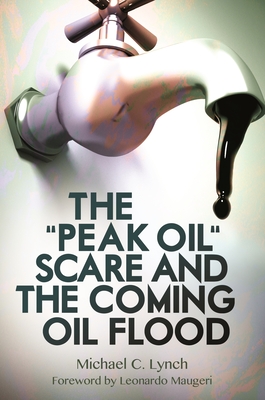
The "Peak Oil" Scare and the Coming Oil Flood
| AUTHOR | Maugeri, Leonardo; Maugeri, Leonardo; Lynch, Michael et al. |
| PUBLISHER | Praeger (07/25/2016) |
| PRODUCT TYPE | Hardcover (Hardcover) |
Description
Is the earth's oil supply starting to run out, or is there far more oil than some experts believe? This book points out flaws in the research used to warn of an oil shortfall and predicts that large new reserves of oil are soon to be tapped.
In the last decade, oil experts, geologists, and policy makers alike have warned that a peak in oil production around the world was about to be reached and that global economic distress would result when this occurred. But it didn't happen. The "Peak Oil" Scare and the Coming Oil Flood refutes the recent claims that world oil production is nearing a peak and threatening economic disaster by analyzing the methods used by the theory's proponents. Author Michael C. Lynch, former researcher at Massachusetts Institute of Technology (MIT), debunks the "Peak Oil" crisis prediction and describes how the next few years will instead see large amounts of new supply that will bring oil prices down and boost the global economy. This book will be invaluable to those involved in the energy industry, including among those fields that are competing with oil, as well as financial institutions for which the price of oil is of critical importance. Lynch uncovers the facts behind the misleading news stories and media coverage on oil production as well as the analytic process that reveals the truth about the global oil supply. General readers will be dismayed to learn how governments have frequently been led astray by seeming logical theories that prove to have no sound basis and will come away with a healthy sense of skepticism about popular economics.
Show More
Product Format
Product Details
ISBN-13:
9781440831867
ISBN-10:
1440831866
Binding:
Hardback or Cased Book (Sewn)
Content Language:
English
More Product Details
Page Count:
504
Carton Quantity:
16
Product Dimensions:
6.30 x 1.80 x 9.30 inches
Weight:
2.10 pound(s)
Feature Codes:
Bibliography,
Index,
Dust Cover
Country of Origin:
US
Subject Information
BISAC Categories
Technology & Engineering | Power Resources - Fossil Fuels
Technology & Engineering | Industries - Energy
Technology & Engineering | Real Estate - General
Dewey Decimal:
333.823
Library of Congress Control Number:
2016009907
Descriptions, Reviews, Etc.
publisher marketing
Is the earth's oil supply starting to run out, or is there far more oil than some experts believe? This book points out flaws in the research used to warn of an oil shortfall and predicts that large new reserves of oil are soon to be tapped.
In the last decade, oil experts, geologists, and policy makers alike have warned that a peak in oil production around the world was about to be reached and that global economic distress would result when this occurred. But it didn't happen. The "Peak Oil" Scare and the Coming Oil Flood refutes the recent claims that world oil production is nearing a peak and threatening economic disaster by analyzing the methods used by the theory's proponents. Author Michael C. Lynch, former researcher at Massachusetts Institute of Technology (MIT), debunks the "Peak Oil" crisis prediction and describes how the next few years will instead see large amounts of new supply that will bring oil prices down and boost the global economy. This book will be invaluable to those involved in the energy industry, including among those fields that are competing with oil, as well as financial institutions for which the price of oil is of critical importance. Lynch uncovers the facts behind the misleading news stories and media coverage on oil production as well as the analytic process that reveals the truth about the global oil supply. General readers will be dismayed to learn how governments have frequently been led astray by seeming logical theories that prove to have no sound basis and will come away with a healthy sense of skepticism about popular economics.
Show More
Your Price
$64.35