
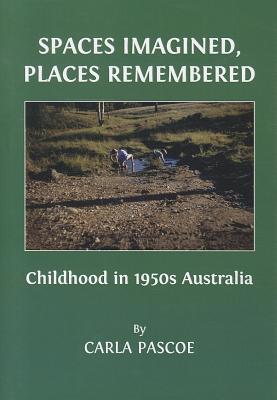
Spaces Imagined, Places Remembered: Childhood in 1950s Australia
| AUTHOR | Pascoe, Carla |
| PUBLISHER | Cambridge Scholars Publishing (09/01/2011) |
| PRODUCT TYPE | Hardcover (Hardcover) |
Description
With the end of World War II, Australians turned to rebuilding their nation, placing the perceived educational and social needs of children at the forefront of their efforts. Urban planners aimed to protect children from the potential degradation of urban environments through refashioning slums and laying out spacious streets in suburbia. Concomitant with a renewed public emphasis on the domestic life of the family, architects and home magazines promoted the benefits of modernism, which encouraged a stark functionalism and new social relationships within the home. School authorities and architects sought to create educational environments that would foster learning and instil discipline in pupils. Whilst these were the spatial discourses most dominant in 1950s Australia, closer examination of two Melbourne localities reveals that such ideals were often compromised in practice. Australia was suffering a housing crisis, with building hampered by material and labour shortages that persisted until the mid-1950s. A fertility boom and the influx of migration caused a demographic leap that left urban planners scrambling to provide infrastructure for the rapidly expanding city. Thousands of new homes and scores of new schools were urgently needed. Given these circumstances, many of the neighbourhoods, houses and schools of the 1950s failed to live up to the aspirational ideals of planning and architectural discourses. The childhood memories of people who grew up in Melbourne during the 1950s reveal a markedly different perspective to the expert spatial notions of this era. In their recollections of the landscapes and buildings of childhood, interviewees recalled emotional resonances, sensory experiences and social interactions associated with particular places. Urban planners and architects viewed physical environments as abstract spaces. But for post-war children, these environments were places imbued with complex personal meanings.
Show More
Product Format
Product Details
ISBN-13:
9781443831765
ISBN-10:
144383176X
Binding:
Hardback or Cased Book (Unsewn / Adhesive Bound)
Content Language:
English
More Product Details
Page Count:
300
Carton Quantity:
0
Product Dimensions:
6.00 x 0.90 x 8.20 inches
Weight:
1.20 pound(s)
Feature Codes:
Bibliography,
Index,
Dust Cover,
Table of Contents,
Illustrated
Country of Origin:
US
Subject Information
BISAC Categories
Non-Classifiable | Non-Classifiable
Dewey Decimal:
305.230
Library of Congress Control Number:
2012398359
Descriptions, Reviews, Etc.
publisher marketing
With the end of World War II, Australians turned to rebuilding their nation, placing the perceived educational and social needs of children at the forefront of their efforts. Urban planners aimed to protect children from the potential degradation of urban environments through refashioning slums and laying out spacious streets in suburbia. Concomitant with a renewed public emphasis on the domestic life of the family, architects and home magazines promoted the benefits of modernism, which encouraged a stark functionalism and new social relationships within the home. School authorities and architects sought to create educational environments that would foster learning and instil discipline in pupils. Whilst these were the spatial discourses most dominant in 1950s Australia, closer examination of two Melbourne localities reveals that such ideals were often compromised in practice. Australia was suffering a housing crisis, with building hampered by material and labour shortages that persisted until the mid-1950s. A fertility boom and the influx of migration caused a demographic leap that left urban planners scrambling to provide infrastructure for the rapidly expanding city. Thousands of new homes and scores of new schools were urgently needed. Given these circumstances, many of the neighbourhoods, houses and schools of the 1950s failed to live up to the aspirational ideals of planning and architectural discourses. The childhood memories of people who grew up in Melbourne during the 1950s reveal a markedly different perspective to the expert spatial notions of this era. In their recollections of the landscapes and buildings of childhood, interviewees recalled emotional resonances, sensory experiences and social interactions associated with particular places. Urban planners and architects viewed physical environments as abstract spaces. But for post-war children, these environments were places imbued with complex personal meanings.
Show More
Your Price
$75.19