
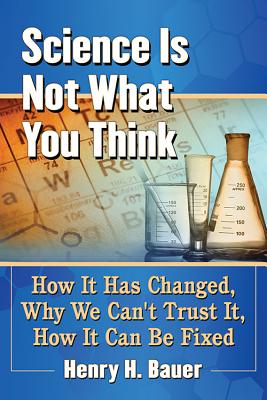
Science Is Not What You Think: How It Has Changed, Why We Can't Trust It, How It Can Be Fixed
| AUTHOR | Bauer, Henry H. |
| PUBLISHER | McFarland & Company (06/26/2017) |
| PRODUCT TYPE | Paperback (Paperback) |
This book discusses the ways in which science, the touchstone of reliable knowledge in modern society, changed dramatically in the second half of the 20th century, becoming less trustworthy through conflicts of interest and excessive competitiveness. Fraud became common enough that organized efforts to combat it now include a federal Office of Research Integrity. Competent minority opinions are sometimes thereby suppressed, with the result that policy makers, the media and the public are presented with biased or incomplete information. Evidence tending to challenge established theories is sometimes rejected without addressing its substance. While most would agree in the abstract that science can go wrong, few would consider--despite interesting contrary evidence--that official consensus about the origins of the universe or the causes of global warming might be mistaken.
This book discusses the ways in which science, the touchstone of reliable knowledge in modern society, changed dramatically in the second half of the 20th century, becoming less trustworthy through conflicts of interest and excessive competitiveness. Fraud became common enough that organized efforts to combat it now include a federal Office of Research Integrity. Competent minority opinions are sometimes thereby suppressed, with the result that policy makers, the media and the public are presented with biased or incomplete information. Evidence tending to challenge established theories is sometimes rejected without addressing its substance. While most would agree in the abstract that science can go wrong, few would consider--despite interesting contrary evidence--that official consensus about the origins of the universe or the causes of global warming might be mistaken.