
ISBN 9781477452547 is currently unpriced. Please contact us for pricing.
Available options are listed below:
Available options are listed below:
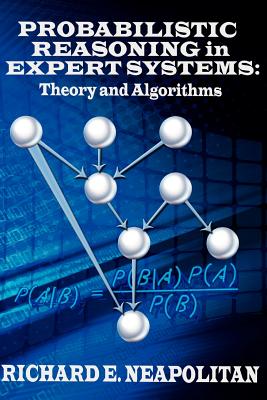
Probabilistic Reasoning In Expert Systems: Theory and Algorithms
| AUTHOR | Neapolitan, Richard E.; Neapolitan, Dr Richard E. |
| PUBLISHER | Createspace Independent Publishing Platform (06/19/2012) |
| PRODUCT TYPE | Paperback (Paperback) |
Description
This text is a reprint of the seminal 1989 book Probabilistic Reasoning in Expert systems: Theory and Algorithms, which helped serve to create the field we now call Bayesian networks. It introduces the properties of Bayesian networks (called causal networks in the text), discusses algorithms for doing inference in Bayesian networks, covers abductive inference, and provides an introduction to decision analysis. Furthermore, it compares rule-base experts systems to ones based on Bayesian networks, and it introduces the frequentist and Bayesian approaches to probability. Finally, it provides a critique of the maximum entropy formalism. Probabilistic Reasoning in Expert Systems was written from the perspective of a mathematician with the emphasis being on the development of theorems and algorithms. Every effort was made to make the material accessible. There are ample examples throughout the text. This text is important reading for anyone interested in both the fundamentals of Bayesian networks and in the history of how they came to be. It also provides an insightful comparison of the two most prominent approaches to probability.
Show More
Product Format
Product Details
ISBN-13:
9781477452547
ISBN-10:
1477452540
Binding:
Paperback or Softback (Trade Paperback (Us))
Content Language:
English
More Product Details
Page Count:
448
Carton Quantity:
20
Product Dimensions:
5.98 x 0.91 x 9.02 inches
Weight:
1.31 pound(s)
Country of Origin:
US
Subject Information
BISAC Categories
Computers | Expert Systems
Computers | Intelligence (AI) & Semantics
Dewey Decimal:
006.33
Descriptions, Reviews, Etc.
publisher marketing
This text is a reprint of the seminal 1989 book Probabilistic Reasoning in Expert systems: Theory and Algorithms, which helped serve to create the field we now call Bayesian networks. It introduces the properties of Bayesian networks (called causal networks in the text), discusses algorithms for doing inference in Bayesian networks, covers abductive inference, and provides an introduction to decision analysis. Furthermore, it compares rule-base experts systems to ones based on Bayesian networks, and it introduces the frequentist and Bayesian approaches to probability. Finally, it provides a critique of the maximum entropy formalism. Probabilistic Reasoning in Expert Systems was written from the perspective of a mathematician with the emphasis being on the development of theorems and algorithms. Every effort was made to make the material accessible. There are ample examples throughout the text. This text is important reading for anyone interested in both the fundamentals of Bayesian networks and in the history of how they came to be. It also provides an insightful comparison of the two most prominent approaches to probability.
Show More