
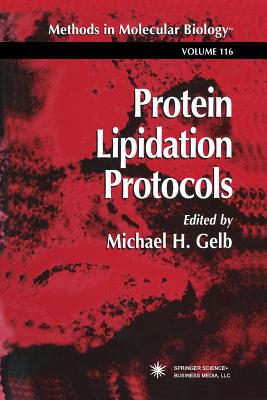
Protein Lipidation Protocols
| PUBLISHER | Humana (08/14/2013) |
| PRODUCT TYPE | Paperback (Paperback) |
Description
It is hard to think of a protein in eukaryotic cells that does not undergo some type of posttranslational modification. The covalent attachment of l- ids to proteins, protein lipidation, occurs for a few thousand proteins. Several functions for protein lipidation are known. Protein lipids may target proteins to specific cellular membranes, they may serve as molecular switches that allow cytosol-to-membrane transfer, they may direct protein-protein compl- ation, and they may stabilize protein structure. In cases such as the fatty a- lation of intracellular loops of transmembrane proteins, the funtions of the protein lipidations are not known. This volume-Protein Lipidation Protocols-provides detailed meth- ologies for the study of these processes. Since this is a rapidly growing field, many new experimental techniques have been developing over the past few years. All of the experimental techniques described in this volume have emerged during this time. The editor has made a special effort to include only those techniques that have not been previously described in a "hands-on" f- mat.
Show More
Product Format
Product Details
ISBN-13:
9781489943309
ISBN-10:
1489943307
Binding:
Paperback or Softback (Trade Paperback (Us))
Content Language:
English
More Product Details
Page Count:
240
Carton Quantity:
32
Product Dimensions:
6.00 x 0.53 x 9.00 inches
Weight:
0.75 pound(s)
Country of Origin:
NL
Subject Information
BISAC Categories
Science | Life Sciences - Biochemistry
Dewey Decimal:
572
Descriptions, Reviews, Etc.
jacket back
In Protein Lipidation Protocols, Michael Gelb brings together a collection of readily reproducible techniques for studying protein lipidation, the covalent attachment of lipids to proteins. These cutting-edge methods-many never published before in a "hands-on" format-deal with glycosyl phosphatidylinositol (GPI)-containing compounds, protein fatty acylation, and protein prenylation. Included are novel techniques for determining the chemical structure of GPI-anchors, for radiolabeling the prenyl groups of protein in eukaryotic cells, a tool for developing inhibitors of the protein farnesyltransferase, and for an exciting lysosomal enzyme that cleaves fatty acyl groups from proteins, the first fatty acylase discovered.
Protein Lipidation Protocols offers biochemists, cell and molecular biologists, medicinal chemists, and pharmaceutical researchers state-of-the-art tools for understanding the complex biochemistry of protein lipidation, as well as catalyzing the development of many important new biopharmaceuticals, including anticancer drugs.
Protein Lipidation Protocols offers biochemists, cell and molecular biologists, medicinal chemists, and pharmaceutical researchers state-of-the-art tools for understanding the complex biochemistry of protein lipidation, as well as catalyzing the development of many important new biopharmaceuticals, including anticancer drugs.
Show More
publisher marketing
It is hard to think of a protein in eukaryotic cells that does not undergo some type of posttranslational modification. The covalent attachment of l- ids to proteins, protein lipidation, occurs for a few thousand proteins. Several functions for protein lipidation are known. Protein lipids may target proteins to specific cellular membranes, they may serve as molecular switches that allow cytosol-to-membrane transfer, they may direct protein-protein compl- ation, and they may stabilize protein structure. In cases such as the fatty a- lation of intracellular loops of transmembrane proteins, the funtions of the protein lipidations are not known. This volume-Protein Lipidation Protocols-provides detailed meth- ologies for the study of these processes. Since this is a rapidly growing field, many new experimental techniques have been developing over the past few years. All of the experimental techniques described in this volume have emerged during this time. The editor has made a special effort to include only those techniques that have not been previously described in a "hands-on" f- mat.
Show More
List Price $169.00
Your Price
$167.31