
ISBN 9781491058817 is currently unpriced. Please contact us for pricing.
Available options are listed below:
Available options are listed below:
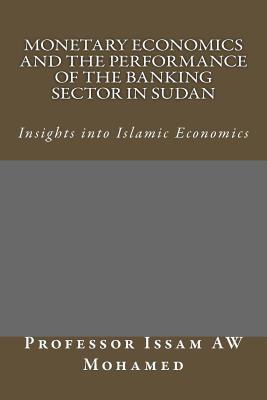
Monetary Economics and the Performance of the Banking Sector in Sudan
| AUTHOR | Mohamed, Prof Issam Aw; Mohamed, Issam Aw |
| PUBLISHER | Createspace Independent Publishing Platform (07/22/2013) |
| PRODUCT TYPE | Paperback (Paperback) |
Description
Currently, Sudan is living under abnormal economic conditions, which can be described as suffocating. The banking sector has been suffering from the problem of cash outflow over the last three decades, generating the following impacts: Loss of banking sector of its role of financial intermediation, cash scarcity in the banking sector, large government borrowings from unreal source of finance, thus, more inflation. Rumors are that government lost control of the economic situation, reverted to printing money to cater for lack of liquidity. Truly, bad economic administration is a major problem, however, the methodological destruction of the real economic sectors of the country is another one.. The research attempts to specify the main determinants of cash outflow from the banking sector in Sudan (during the period 1972-2011). Hence, those revealing the major impacts of the cash outflow on the economic activity and rates of inflation. However, chaotic economic policies as: incalculable privatization of state institutions and corrupt practices, false Islamization of the banking sector with improper institutional foundations and corrupt economic and administrative governmental institutions, are not excluded as major part of the problem.
Show More
Product Format
Product Details
ISBN-13:
9781491058817
ISBN-10:
1491058811
Binding:
Paperback or Softback (Trade Paperback (Us))
Content Language:
English
More Product Details
Page Count:
198
Carton Quantity:
40
Product Dimensions:
5.98 x 0.42 x 9.02 inches
Weight:
0.60 pound(s)
Country of Origin:
US
Subject Information
BISAC Categories
Business & Economics | Banks & Banking
Descriptions, Reviews, Etc.
publisher marketing
Currently, Sudan is living under abnormal economic conditions, which can be described as suffocating. The banking sector has been suffering from the problem of cash outflow over the last three decades, generating the following impacts: Loss of banking sector of its role of financial intermediation, cash scarcity in the banking sector, large government borrowings from unreal source of finance, thus, more inflation. Rumors are that government lost control of the economic situation, reverted to printing money to cater for lack of liquidity. Truly, bad economic administration is a major problem, however, the methodological destruction of the real economic sectors of the country is another one.. The research attempts to specify the main determinants of cash outflow from the banking sector in Sudan (during the period 1972-2011). Hence, those revealing the major impacts of the cash outflow on the economic activity and rates of inflation. However, chaotic economic policies as: incalculable privatization of state institutions and corrupt practices, false Islamization of the banking sector with improper institutional foundations and corrupt economic and administrative governmental institutions, are not excluded as major part of the problem.
Show More