
Back to Search

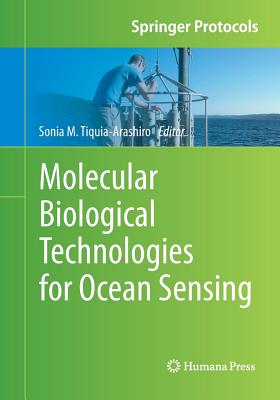
Molecular Biological Technologies for Ocean Sensing

PUBLISHER Humana (08/23/2016)
PRODUCT TYPE Paperback (Paperback)

Description
The development of ocean sensors remains a ripe area for future investigation from science, policy and systemsengineering standpoints. Clearly, there are many options forrealizing integrated molecular analytical sensing systems. The definition of key target molecules, detection methodsand signal transduction models largely remain to be determined.Moreover, there remains ahuge challenge of merging this new class of instrument with different deployment platforms, and supplying necessarypower and data telemetry infrastructure for their operation. Molecular Biological Technologies for Ocean Sensing features methods papers on the application of ecogenomic sensors on autonomous platforms in the ocean. Topics include the use of ecogenomic sensors as a tool in whole-cell and cell-free based detection and monitoring a suite of pathogens and biotoxins that are of public health concern; documenting species diversity, evolution and metabolic function; identification and quantification of aquatic organisms; and inferring metabolic potential and activities of microorganisms in the ocean. Each contribution focuses on the (1) functional requirements for detecting specific microorganisms and the genes that they harbor and express;(2) examples of research activities that take advantage of molecular detection technologies;(3) some of the challenges faced when projecting development and use of novel instruments that will utilize molecular techniques onboard autonomous platforms;and future directions. Bringing these advancements on autonomous platforms, monitoring required sample collection and processing schemes will differ from those currently used (i.e. biomedical diagnostics). This book is the first of its kind to compile current technologies for studying organisms in situ. It will aid in transfer technology to oceanographers, ecologists, microbiologists, and environmental scientists with needs for a remote, in-water sensing capability and for integration with larger scale observatory operations. With this network in place, there is a potential to bridge the gap among regulatory agencies and academics about how this kind of technology can be used for research and monitoring purposes.
Show More
Product Format
Product Details
ISBN-13: 9781493962709
ISBN-10: 1493962701
Binding: Paperback or Softback (Trade Paperback (Us))
Content Language: English
More Product Details
Page Count: 295
Carton Quantity: 13
Product Dimensions: 7.00 x 0.65 x 10.00 inches
Weight: 1.18 pound(s)
Feature Codes: Illustrated
Country of Origin: NL
Subject Information
BISAC Categories
Science | Life Sciences - Ecology
Science | Life Sciences - Microbiology
Science | Earth Sciences - Oceanography
Dewey Decimal: 578.77
Descriptions, Reviews, Etc.
jacket back

Back cover copy

The development of ocean sensors remains a ripe area for future investigation from science, policy and systems engineering standpoints. Clearly, there are many options for realizing integrated molecular analytical sensing systems. The definition of key target molecules, detection methods and signal transduction models largely remain to be determined. Moreover, there remains a huge challenge of merging this new class of instrument with different deployment platforms, and supplying necessarypower and data telemetry infrastructure for their operation.

Molecular Biological Technologies for Ocean Sensing features methods papers on the application of ecogenomic sensors on autonomous platforms in the ocean. Topics include the use of ecogenomic sensors as a tool in whole-cell and cell-free based detection and monitoring a suite of pathogens and biotoxins that are of public health concern; documenting species diversity, evolution and metabolic function; identification and quantification of aquatic organisms; and inferring metabolic potential and activities of microorganisms in the ocean. Each contribution focuses on the (1) functional requirements for detecting specific microorganisms and the genes that they harbor and express; (2) examples of research activities that take advantage of molecular detection technologies; (3) some of the challenges faced when projecting development and use of novel instruments that will utilize molecular techniques onboard autonomous platforms;and future directions. Bringing these advancements on autonomous platforms, monitoring required sample collection and processing schemes will differ from those currently used (i.e. biomedical diagnostics).

This book is the first of its kind to compile current technologies for studying organisms in situ. It will aid in transfer technology to oceanographers, ecologists, microbiologists, and environmental scientistswith needs for a remote, in-water sensing capability and for integration with larger scale observatory operations. With this network in place, there is a potential to bridge the gap among regulatory agencies and academics about how this kind of technology can be used for research and monitoring purposes.

Show More
publisher marketing
The development of ocean sensors remains a ripe area for future investigation from science, policy and systemsengineering standpoints. Clearly, there are many options forrealizing integrated molecular analytical sensing systems. The definition of key target molecules, detection methodsand signal transduction models largely remain to be determined.Moreover, there remains ahuge challenge of merging this new class of instrument with different deployment platforms, and supplying necessarypower and data telemetry infrastructure for their operation. Molecular Biological Technologies for Ocean Sensing features methods papers on the application of ecogenomic sensors on autonomous platforms in the ocean. Topics include the use of ecogenomic sensors as a tool in whole-cell and cell-free based detection and monitoring a suite of pathogens and biotoxins that are of public health concern; documenting species diversity, evolution and metabolic function; identification and quantification of aquatic organisms; and inferring metabolic potential and activities of microorganisms in the ocean. Each contribution focuses on the (1) functional requirements for detecting specific microorganisms and the genes that they harbor and express;(2) examples of research activities that take advantage of molecular detection technologies;(3) some of the challenges faced when projecting development and use of novel instruments that will utilize molecular techniques onboard autonomous platforms;and future directions. Bringing these advancements on autonomous platforms, monitoring required sample collection and processing schemes will differ from those currently used (i.e. biomedical diagnostics). This book is the first of its kind to compile current technologies for studying organisms in situ. It will aid in transfer technology to oceanographers, ecologists, microbiologists, and environmental scientists with needs for a remote, in-water sensing capability and for integration with larger scale observatory operations. With this network in place, there is a potential to bridge the gap among regulatory agencies and academics about how this kind of technology can be used for research and monitoring purposes.
Show More
List Price $139.00
Your Price  $137.61
Paperback