
ISBN 9781494332075 is currently unpriced. Please contact us for pricing.
Available options are listed below:
Available options are listed below:
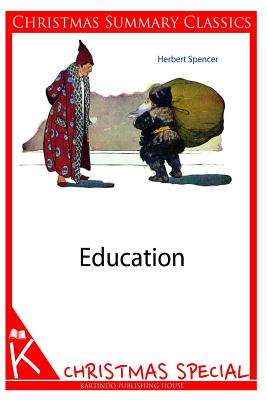
Education [Christmas Summary Classics]
| AUTHOR | Spencer, Herbert |
| PUBLISHER | Createspace Independent Publishing Platform (12/01/2013) |
| PRODUCT TYPE | Paperback (Paperback) |
Description
Christmas Summary Classics This series contains summary of Classic books such as Emma, Arne, Arabian Nights, Pride and prejudice, Tower of London, Wealth of Nations etc. Each book is specially crafted after reading complete book in less than 30 pages. One who wants to get joy of book reading especially in very less time can go for it. About the Book Herbert Spencer was born at Derby, in England, in 1820. He was taught by his father who was a teacher, and by his uncle, a clergyman. At the age of seventeen he became a civil engineer, but about eight years later abandoned the profession because he believed it to be overcrowded. In 1848 he was engaged on the "Economist," and five years later he began to write for the quarterly reviews. Spencer's little book on Education dates from 1861, and has probably been more widely read than all his other works put together, having been translated into almost all civilised, and several primitive languages. It is generally recognised as having effected the greatest educational reform of the nineteenth century. It was certainly the most powerful of single agents in effecting the liberation of girlhood from its unnatural trammels. It placed the whole theory of education upon a sound biological basis in the nature of the child and the natural course of its evolution as a living creature. Spencer struck a fatal blow at the morbid asceticism by proxy which adults used to practice upon their children, and so great has been the influence of his work for the amelioration of childhood that he is certainly to be counted with the philanthropic on this ground. The first chapter has no equal in literature in its splendidly sober praise of natural knowledge. The wide knowledge which Spencer's writings display of physical science, and his constant endeavor to illustrate and support his system by connecting its position with scientific facts and laws have given his philosophy great currency among men of science-more so, indeed, than among philosophical experts. Spencer died December 8, 1903. For more eBooks visit www.kartindo.com
Show More
Product Format
Product Details
ISBN-13:
9781494332075
ISBN-10:
1494332078
Binding:
Paperback or Softback (Trade Paperback (Us))
Content Language:
English
More Product Details
Page Count:
26
Carton Quantity:
314
Product Dimensions:
5.98 x 0.05 x 9.02 inches
Weight:
0.11 pound(s)
Country of Origin:
US
Subject Information
BISAC Categories
Reference | General
Descriptions, Reviews, Etc.
publisher marketing
Christmas Summary Classics This series contains summary of Classic books such as Emma, Arne, Arabian Nights, Pride and prejudice, Tower of London, Wealth of Nations etc. Each book is specially crafted after reading complete book in less than 30 pages. One who wants to get joy of book reading especially in very less time can go for it. About the Book Herbert Spencer was born at Derby, in England, in 1820. He was taught by his father who was a teacher, and by his uncle, a clergyman. At the age of seventeen he became a civil engineer, but about eight years later abandoned the profession because he believed it to be overcrowded. In 1848 he was engaged on the "Economist," and five years later he began to write for the quarterly reviews. Spencer's little book on Education dates from 1861, and has probably been more widely read than all his other works put together, having been translated into almost all civilised, and several primitive languages. It is generally recognised as having effected the greatest educational reform of the nineteenth century. It was certainly the most powerful of single agents in effecting the liberation of girlhood from its unnatural trammels. It placed the whole theory of education upon a sound biological basis in the nature of the child and the natural course of its evolution as a living creature. Spencer struck a fatal blow at the morbid asceticism by proxy which adults used to practice upon their children, and so great has been the influence of his work for the amelioration of childhood that he is certainly to be counted with the philanthropic on this ground. The first chapter has no equal in literature in its splendidly sober praise of natural knowledge. The wide knowledge which Spencer's writings display of physical science, and his constant endeavor to illustrate and support his system by connecting its position with scientific facts and laws have given his philosophy great currency among men of science-more so, indeed, than among philosophical experts. Spencer died December 8, 1903. For more eBooks visit www.kartindo.com
Show More
Author:
Spencer, Herbert
Herbert Spencer (1820-1903) was an English philosopher, political theorist, sociological theorist, author, and editor. He served in the later capacity for the "Economist" from 1843 to 1853. He is perhaps best known for applying evolutionary theory to social development and coined the term "survival of the fittest." His best known works are "Man versus the State" and the multi-volume "System of Synthetic Philosophy".
Show More