
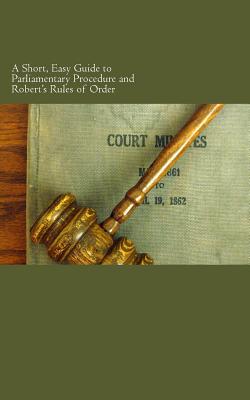
ISBN 9781497412415 is currently unpriced. Please contact us for pricing.
Available options are listed below:
Available options are listed below:
A Short, Easy Guide to Parliamentary Procedure and Robert's Rules of Order
| AUTHOR | Rocheleau, W. F. |
| PUBLISHER | Createspace Independent Publishing Platform (03/21/2014) |
| PRODUCT TYPE | Paperback (Paperback) |
Description
Learn the rules for conducting fair and effective meetings of such organizations as clubs, corporations, and city councils. This handy guide, in simple language, covers motions, voting procedures, the functions of officers, and more.Sample passage: "The member desiring to make a motion gets the chairman's attention by raising his hand or standing up or calling: 'Mr. Chairman.' When given the floor, he begins: 'I move that...' and states his proposal as simply and clearly as possible. If the motion is in order, the chairman asks: 'Will anyone second this motion?' and gives the floor to the first member indicating a wish to do so. This member says simply: 'I second the motion.' If no one is willing to second the motion, the chairman declares that 'the motion is dropped for want of a second' and proceeds with the next order of business. If the motion is seconded, it enters the discussion stage."
Show More
Product Format
Product Details
ISBN-13:
9781497412415
ISBN-10:
1497412412
Binding:
Paperback or Softback (Trade Paperback (Us))
Content Language:
English
More Product Details
Page Count:
24
Carton Quantity:
342
Product Dimensions:
5.00 x 0.05 x 8.00 inches
Weight:
0.07 pound(s)
Country of Origin:
US
Subject Information
BISAC Categories
Reference | General
Descriptions, Reviews, Etc.
publisher marketing
Learn the rules for conducting fair and effective meetings of such organizations as clubs, corporations, and city councils. This handy guide, in simple language, covers motions, voting procedures, the functions of officers, and more.Sample passage: "The member desiring to make a motion gets the chairman's attention by raising his hand or standing up or calling: 'Mr. Chairman.' When given the floor, he begins: 'I move that...' and states his proposal as simply and clearly as possible. If the motion is in order, the chairman asks: 'Will anyone second this motion?' and gives the floor to the first member indicating a wish to do so. This member says simply: 'I second the motion.' If no one is willing to second the motion, the chairman declares that 'the motion is dropped for want of a second' and proceeds with the next order of business. If the motion is seconded, it enters the discussion stage."
Show More