
ISBN 9781503112315 is currently unpriced. Please contact us for pricing.
Available options are listed below:
Available options are listed below:
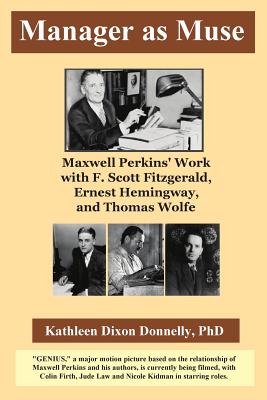
Manager as Muse: Maxwell Perkins' Work with F. Scott Fitzgerald, Ernest Hemingway, and Thomas Wolfe
| AUTHOR | Donnelly, Kathleen Dixon; Donnelly, Ph. D. Kathleen Dixon; Boles, Jean et al. |
| PUBLISHER | Createspace Independent Publishing Platform (11/09/2014) |
| PRODUCT TYPE | Paperback (Paperback) |
Description
"My goodness, Miss Donnelly, Maxwell Perkins was one of the worst businessmen who ever lived." Interview with Charles Scribner, Jr., Chairman of Scribner's, 1980.
One of the many legends surrounding Scribner's editor, Maxwell Perkins (1884-1947) is that he was a terrible businessman. If so, how did he manage to get such classic work out of such volatile creative personalities as F. Scott Fitzgerald, Ernest Hemingway and Thomas Wolfe, among others? And, how did so many of his authors contribute to Scribner's financial success over the decades?
Starting with the excellent biography, Max Perkins, Editor of Genius, by A. Scott Berg, Dr. Kathleen Dixon Donnelly combined information from numerous sources, including several collections of letters, to determine what management skills Perkins used to motivate these three larger than life characters. Based on her thesis for her MBA at Duquesne University in her hometown of Pittsburgh, Pennsylvania, this version of Manager as Muse focuses on developing guidelines which today's managers of creative people can use in working with writers, artists, performers-any of those in the creative industries. The principles of management remain the same. What did Perkins do to keep these novelists writing? How much did he push? How much did he keep hands off?
Through a detailed analysis of the relationships between Perkins and his three most well-known authors, Manager as Muse gives you insights in to how best to work with the creative people you manage to motivate them to achieve success.
One of the many legends surrounding Scribner's editor, Maxwell Perkins (1884-1947) is that he was a terrible businessman. If so, how did he manage to get such classic work out of such volatile creative personalities as F. Scott Fitzgerald, Ernest Hemingway and Thomas Wolfe, among others? And, how did so many of his authors contribute to Scribner's financial success over the decades?
Starting with the excellent biography, Max Perkins, Editor of Genius, by A. Scott Berg, Dr. Kathleen Dixon Donnelly combined information from numerous sources, including several collections of letters, to determine what management skills Perkins used to motivate these three larger than life characters. Based on her thesis for her MBA at Duquesne University in her hometown of Pittsburgh, Pennsylvania, this version of Manager as Muse focuses on developing guidelines which today's managers of creative people can use in working with writers, artists, performers-any of those in the creative industries. The principles of management remain the same. What did Perkins do to keep these novelists writing? How much did he push? How much did he keep hands off?
Through a detailed analysis of the relationships between Perkins and his three most well-known authors, Manager as Muse gives you insights in to how best to work with the creative people you manage to motivate them to achieve success.
Show More
Product Format
Product Details
ISBN-13:
9781503112315
ISBN-10:
1503112314
Binding:
Paperback or Softback (Trade Paperback (Us))
Content Language:
English
More Product Details
Page Count:
232
Carton Quantity:
34
Product Dimensions:
5.98 x 0.49 x 9.02 inches
Weight:
0.70 pound(s)
Country of Origin:
US
Subject Information
BISAC Categories
Business & Economics | Management - General
Descriptions, Reviews, Etc.
publisher marketing
"My goodness, Miss Donnelly, Maxwell Perkins was one of the worst businessmen who ever lived." Interview with Charles Scribner, Jr., Chairman of Scribner's, 1980.
One of the many legends surrounding Scribner's editor, Maxwell Perkins (1884-1947) is that he was a terrible businessman. If so, how did he manage to get such classic work out of such volatile creative personalities as F. Scott Fitzgerald, Ernest Hemingway and Thomas Wolfe, among others? And, how did so many of his authors contribute to Scribner's financial success over the decades?
Starting with the excellent biography, Max Perkins, Editor of Genius, by A. Scott Berg, Dr. Kathleen Dixon Donnelly combined information from numerous sources, including several collections of letters, to determine what management skills Perkins used to motivate these three larger than life characters. Based on her thesis for her MBA at Duquesne University in her hometown of Pittsburgh, Pennsylvania, this version of Manager as Muse focuses on developing guidelines which today's managers of creative people can use in working with writers, artists, performers-any of those in the creative industries. The principles of management remain the same. What did Perkins do to keep these novelists writing? How much did he push? How much did he keep hands off?
Through a detailed analysis of the relationships between Perkins and his three most well-known authors, Manager as Muse gives you insights in to how best to work with the creative people you manage to motivate them to achieve success.
One of the many legends surrounding Scribner's editor, Maxwell Perkins (1884-1947) is that he was a terrible businessman. If so, how did he manage to get such classic work out of such volatile creative personalities as F. Scott Fitzgerald, Ernest Hemingway and Thomas Wolfe, among others? And, how did so many of his authors contribute to Scribner's financial success over the decades?
Starting with the excellent biography, Max Perkins, Editor of Genius, by A. Scott Berg, Dr. Kathleen Dixon Donnelly combined information from numerous sources, including several collections of letters, to determine what management skills Perkins used to motivate these three larger than life characters. Based on her thesis for her MBA at Duquesne University in her hometown of Pittsburgh, Pennsylvania, this version of Manager as Muse focuses on developing guidelines which today's managers of creative people can use in working with writers, artists, performers-any of those in the creative industries. The principles of management remain the same. What did Perkins do to keep these novelists writing? How much did he push? How much did he keep hands off?
Through a detailed analysis of the relationships between Perkins and his three most well-known authors, Manager as Muse gives you insights in to how best to work with the creative people you manage to motivate them to achieve success.
Show More