
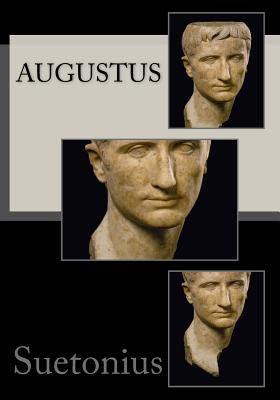
ISBN 9781517102395 is currently unpriced. Please contact us for pricing.
Available options are listed below:
Available options are listed below:
Augustus
| AUTHOR | Suetonius |
| PUBLISHER | Createspace Independent Publishing Platform (08/28/2015) |
| PRODUCT TYPE | Paperback (Paperback) |
Description
Gaius Suetonius Tranquillus, commonly known as Suetonius (c. 69 - after 122 AD), was a Roman historian belonging to the equestrian order who wrote during the early Imperial era of the Roman Empire. His most important surviving work is a set of biographies of twelve successive Roman rulers, from Julius Caesar to Domitian, entitled De Vita Caesarum. He recorded the earliest accounts of Julius Caesar's epileptic seizures. Other works by Suetonius concern the daily life of Rome, politics, oratory, and the lives of famous writers, including poets, historians, and grammarians. A few of these books have partially survived, but many have been lost. Before he died, Julius Caesar had designated his great nephew, Gaius Octavius (who would be named Augustus by the Roman Senate after becoming emperor) as his adopted son and heir. Octavius' mother, Atia, was the daughter of Caesar's sister, Julia Caesaris. Octavian (not yet renamed Augustus) finished the civil wars started by his great-uncle, Julius Caesar. One by one, Augustus defeated the legions of the other generals who wanted to succeed Julius Caesar as the master of the Roman world. Suetonius includes descriptions of these civil wars, including the final one against Mark Antony that ended with the Battle of Actium. Antony had been Octavian's last surviving rival, but committed suicide after his defeat at Actium. It was after this victory in 31 BC that Octavian became master of the Roman world and imperator (or emperor). His declaration of the end of the Civil Wars that had started under Julius Caesar marked the historic beginning of the Roman Empire, and the Pax Romana. Octavian at this point was given the title "Augustus" (meaning "the venerable") by the Roman Senate. After describing the military campaigns of Augustus, Suetonius describes his personal life. A large section of the entire book is devoted to this. This is partly because after Actium, the reign of Augustus was mostly peaceful. It has also been noted by several sources that the entire work of The Twelve Caesars delves more deeply into personal details and gossip relative to other contemporary Roman histories.
Show More
Product Format
Product Details
ISBN-13:
9781517102395
ISBN-10:
1517102391
Binding:
Paperback or Softback (Trade Paperback (Us))
Content Language:
English
More Product Details
Page Count:
46
Carton Quantity:
89
Product Dimensions:
7.00 x 0.10 x 10.00 inches
Weight:
0.22 pound(s)
Country of Origin:
US
Subject Information
BISAC Categories
History | Ancient - Rome
Descriptions, Reviews, Etc.
publisher marketing
Gaius Suetonius Tranquillus, commonly known as Suetonius (c. 69 - after 122 AD), was a Roman historian belonging to the equestrian order who wrote during the early Imperial era of the Roman Empire. His most important surviving work is a set of biographies of twelve successive Roman rulers, from Julius Caesar to Domitian, entitled De Vita Caesarum. He recorded the earliest accounts of Julius Caesar's epileptic seizures. Other works by Suetonius concern the daily life of Rome, politics, oratory, and the lives of famous writers, including poets, historians, and grammarians. A few of these books have partially survived, but many have been lost. Before he died, Julius Caesar had designated his great nephew, Gaius Octavius (who would be named Augustus by the Roman Senate after becoming emperor) as his adopted son and heir. Octavius' mother, Atia, was the daughter of Caesar's sister, Julia Caesaris. Octavian (not yet renamed Augustus) finished the civil wars started by his great-uncle, Julius Caesar. One by one, Augustus defeated the legions of the other generals who wanted to succeed Julius Caesar as the master of the Roman world. Suetonius includes descriptions of these civil wars, including the final one against Mark Antony that ended with the Battle of Actium. Antony had been Octavian's last surviving rival, but committed suicide after his defeat at Actium. It was after this victory in 31 BC that Octavian became master of the Roman world and imperator (or emperor). His declaration of the end of the Civil Wars that had started under Julius Caesar marked the historic beginning of the Roman Empire, and the Pax Romana. Octavian at this point was given the title "Augustus" (meaning "the venerable") by the Roman Senate. After describing the military campaigns of Augustus, Suetonius describes his personal life. A large section of the entire book is devoted to this. This is partly because after Actium, the reign of Augustus was mostly peaceful. It has also been noted by several sources that the entire work of The Twelve Caesars delves more deeply into personal details and gossip relative to other contemporary Roman histories.
Show More