
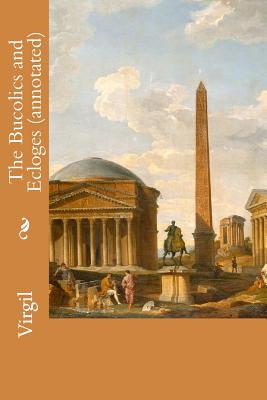
ISBN 9781517129255 is currently unpriced. Please contact us for pricing.
Available options are listed below:
Available options are listed below:
The Bucolics and Ecloges (annotated)
| AUTHOR | Virgil |
| PUBLISHER | Createspace Independent Publishing Platform (08/31/2015) |
| PRODUCT TYPE | Paperback (Paperback) |
Description
The Eclogues, also called the Bucolics, is the first of the three major works of the Latin poet Virgil. Virgil's book contains ten pieces, each called not an idyll but an eclogue ("draft" or "selection" or "reckoning"), populated by and large with herdsmen imagined conversing and performing amoebaean singing in largely rural settings, whether suffering or embracing revolutionary change or happy or unhappy love. Performed with great success on the Roman stage, they feature a mix of visionary politics and eroticism that made Virgil a celebrity, legendary in his own lifetime.
Show More
Product Format
Product Details
ISBN-13:
9781517129255
ISBN-10:
1517129257
Binding:
Paperback or Softback (Trade Paperback (Us))
Content Language:
English
More Product Details
Page Count:
58
Carton Quantity:
140
Product Dimensions:
5.98 x 0.12 x 9.02 inches
Weight:
0.20 pound(s)
Country of Origin:
US
Subject Information
BISAC Categories
Poetry | Ancient & Classical
Poetry | Subjects & Themes - Nature
Descriptions, Reviews, Etc.
publisher marketing
The Eclogues, also called the Bucolics, is the first of the three major works of the Latin poet Virgil. Virgil's book contains ten pieces, each called not an idyll but an eclogue ("draft" or "selection" or "reckoning"), populated by and large with herdsmen imagined conversing and performing amoebaean singing in largely rural settings, whether suffering or embracing revolutionary change or happy or unhappy love. Performed with great success on the Roman stage, they feature a mix of visionary politics and eroticism that made Virgil a celebrity, legendary in his own lifetime.
Show More
Author:
Virgil
Publius Vergilius Maro, known to us as Virgil (70 B.C.-19 B.C.), is best remembered for his masterpiece, the Aeneid, in which he represented the Emperor Augustus as a descendant of the half-divine Aeneas, a refugee from the fall of Troy and legendary founder of Rome. Virgil claimed on his deathbed that the Aeneid was unfinished and expressed a desire to have it burned, but it became the national epic of ancient Rome, a monument of Latin literature, and has been regarded as one of the great classics of Western literature ever since. Virgil's other works include the Eclogues and the Georgics, also considered masterpieces.
Show More