
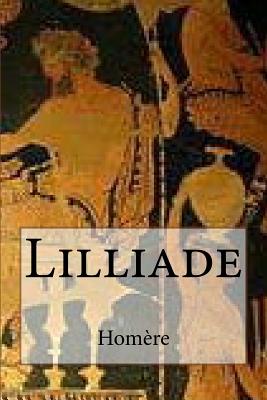
Lilliade
| AUTHOR | Homere |
| PUBLISHER | Createspace Independent Publishing Platform (09/17/2015) |
| PRODUCT TYPE | Paperback (Paperback) |
Description
Homer (Greek Homeros, "hostage" or "one who is obliged to follow" is deemed to be a bard (poet) in the late eighth century BC. It was simply called "the Poet" by the Ancients. The first two works of Western literature are the Iliad and the Odyssey are attributed to him. It is still difficult today to establish with certainty whether Homer was a historical person or a constructed identity, and if it is the author of two famous epics that are at the foundation of Western literature. However several Ionian cities (Chios, Smyrna, Colophon or Cumae) disputed the origin of the bard and tradition individualisait repeating that Homer was blind. Place of Homer in Greek literature is quite major as alone represents the epic genre in this period: the Iliad and the Odyssey are attributed him from the sixth century BC. BC, as well as two comic poems, the Batrachomyomachia (literally "battle of frogs and rats") and the Margites, and the poems of the Homeric Hymns. Homeric language is an archaic language already in the eighth century BC. BC and even more when setting the text in the sixth century BC. BC: it is associated with the use of dactylic hexameter. L'Iliade (en grec ancien Ili s, en grec moderne Ili da) est une pop e de la Gr ce antique attribu e l'a de Hom re. Ce nom provient de la p riphrase le po me d'Ilion h Ili s po sis), Ilion lion) tant l'autre nom de la ville de Troie. L'Iliade est compos e de quinze mille trois cent trente-sept hexam tres dactyliques et, depuis l' poque hell nistique, divis e en vingt-quatre chants. Le texte a probablement t compos entre 850 et 750 av. J.-C. (dates d j mentionn es par H rodote), soit quatre si cles apr s la p riode laquelle les historiens font correspondre la guerre mythique qu'il relate. Il n'a t fix par crit que sous Pisistrate, au VIe si cle av. J.-C. Le th me de l' pop e est la guerre de Troie dans laquelle s'affrontent les Ach ens venus de toute la Gr ce et les Troyens et leurs alli s, chaque camp tant soutenu par diverses divinit s comme Ath na, Pos idon ou Apollon. Apr s un si ge de dix ans, le sort des armes h site encore dans de multiples combats collectifs ou individuels o s'illustrent des figures comme Ajax, Hector ou Patrocle. Finalement les Ach ens l'emportent gr ce la victoire d'Achille qui tue le chef troyen en combat singulier.
Show More
Product Format
Product Details
ISBN-13:
9781517377472
ISBN-10:
1517377471
Binding:
Paperback or Softback (Trade Paperback (Us))
Content Language:
French
More Product Details
Page Count:
514
Carton Quantity:
16
Product Dimensions:
6.00 x 1.03 x 9.00 inches
Weight:
1.50 pound(s)
Country of Origin:
US
Subject Information
BISAC Categories
Reference | Encyclopedias
Descriptions, Reviews, Etc.
publisher marketing
Homer (Greek Homeros, "hostage" or "one who is obliged to follow" is deemed to be a bard (poet) in the late eighth century BC. It was simply called "the Poet" by the Ancients. The first two works of Western literature are the Iliad and the Odyssey are attributed to him. It is still difficult today to establish with certainty whether Homer was a historical person or a constructed identity, and if it is the author of two famous epics that are at the foundation of Western literature. However several Ionian cities (Chios, Smyrna, Colophon or Cumae) disputed the origin of the bard and tradition individualisait repeating that Homer was blind. Place of Homer in Greek literature is quite major as alone represents the epic genre in this period: the Iliad and the Odyssey are attributed him from the sixth century BC. BC, as well as two comic poems, the Batrachomyomachia (literally "battle of frogs and rats") and the Margites, and the poems of the Homeric Hymns. Homeric language is an archaic language already in the eighth century BC. BC and even more when setting the text in the sixth century BC. BC: it is associated with the use of dactylic hexameter. L'Iliade (en grec ancien Ili s, en grec moderne Ili da) est une pop e de la Gr ce antique attribu e l'a de Hom re. Ce nom provient de la p riphrase le po me d'Ilion h Ili s po sis), Ilion lion) tant l'autre nom de la ville de Troie. L'Iliade est compos e de quinze mille trois cent trente-sept hexam tres dactyliques et, depuis l' poque hell nistique, divis e en vingt-quatre chants. Le texte a probablement t compos entre 850 et 750 av. J.-C. (dates d j mentionn es par H rodote), soit quatre si cles apr s la p riode laquelle les historiens font correspondre la guerre mythique qu'il relate. Il n'a t fix par crit que sous Pisistrate, au VIe si cle av. J.-C. Le th me de l' pop e est la guerre de Troie dans laquelle s'affrontent les Ach ens venus de toute la Gr ce et les Troyens et leurs alli s, chaque camp tant soutenu par diverses divinit s comme Ath na, Pos idon ou Apollon. Apr s un si ge de dix ans, le sort des armes h site encore dans de multiples combats collectifs ou individuels o s'illustrent des figures comme Ajax, Hector ou Patrocle. Finalement les Ach ens l'emportent gr ce la victoire d'Achille qui tue le chef troyen en combat singulier.
Show More
Author:
Homere
VIIIe s. av. J.-C. ? Herodote pensait qu'il etait originaire d'Asie Mineure. La tradition le representait vieux et aveugle, errant de ville en ville et declamant ses vers. Les poemes homeriques, recites aux fetes solennelles et enseignes aux enfants, ont exerce dans l'Antiquite une profonde influence sur les philosophes, les ecrivains et l'education. Ils occupent une place importante dans la culture classique europeenne.
Show More
List Price $32.40
Your Price
$32.08