
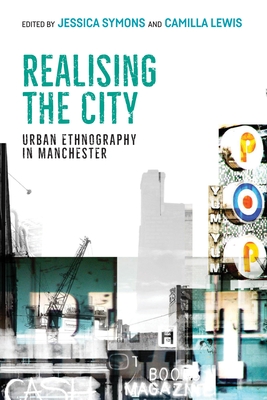
Realising the City: Urban Ethnography in Manchester
| PUBLISHER | Manchester University Press (11/27/2017) |
| PRODUCT TYPE | Hardcover (Hardcover) |
Description
This book offers an inside view of Manchester, England demonstrating the complexity of urban dynamics from a range of ethnographic vantage points, including the city's football clubs, the airport, housing estates, the Gay Village and the city's annual civic parade. These perspectives help trace the multiple dynamics of a vibrant and rapidly changing post-industrial city, showing how people's decisions and actions co-produce the city and give it shape. Using the metaphor of the kaleidoscope, with each turn of the wheel, another aspect of the city is materialised. In doing so, the contributors complicate the dominant narrative of Manchester's renaissance as driven by the city administration's entrepreneurial ethos. By taking up civic space and resources with council-led cultural representations focused largely on generating financial income for the city, three decades of command-and-control politics has inhibited grassroots and spontaneous forms of emergent publics.
Show More
Product Format
Product Details
ISBN-13:
9781526100733
ISBN-10:
1526100738
Binding:
Hardback or Cased Book (Sewn)
Content Language:
English
More Product Details
Page Count:
248
Carton Quantity:
26
Product Dimensions:
6.14 x 0.63 x 9.21 inches
Weight:
1.16 pound(s)
Feature Codes:
Bibliography,
Illustrated
Country of Origin:
GB
Subject Information
BISAC Categories
Political Science | Public Policy - City Planning & Urban Development
Political Science | Sociology - Urban
Political Science | Regional
Descriptions, Reviews, Etc.
jacket back
What is a city? How does it come into being? Who are the people involved? How are decisions made and what happens next?
Realising the city provides multiple insider perspectives on this northern English city. Drawing on extensive fieldwork into the city's football clubs, annual civic parade and Gay Village, airport and infrastructure, parks and housing estates, these ethnographic accounts trace the multiple dynamics of a vibrant and rapidly changing post-industrial city. They show how people's decisions and actions co-produce the city and give it shape. In doing so, the contributors complicate the dominant narrative of Manchester's renaissance as solely driven by the city administration's entrepreneurial ethos. Instead, these ethnographies of Manchester reveal a city of paradoxes; economic recession, public sector cuts, pockets of deprivation and political disengagement coexist alongside strong leadership, aspiration, vision, cultural growth, and a proud local identity. They show the impossibility of representing the city as a unified object and how people act as if it was. Realising the city provides essential reading for researchers interested in contemporary urban dynamics. Its accessible style and material will also interest community activists, city administrators, political analysts and elected officials. The book is suitable for undergraduate reading lists for courses teaching ethnographic methods and on urban studies courses within sociology, anthropology, geography and the built environment.
Show More
jacket front
What is a city? How does it come into being? Who are the people involved? How are decisions made and what happens next? Realising the city provides multiple insider perspectives on this northern English city. Drawing on extensive fieldwork into the city's football clubs, annual civic parade and Gay Village, airport and infrastructure, parks and housing estates, these ethnographic accounts trace the multiple dynamics of a vibrant and rapidly changing post-industrial city. They show how people's decisions and actions co-produce the city and give it shape. In doing so, the contributors complicate the dominant narrative of Manchester's renaissance as solely driven by the city administration's entrepreneurial ethos. Instead, these ethnographies of Manchester reveal a city of paradoxes; economic recession, public sector cuts, pockets of deprivation and political disengagement coexist alongside strong leadership, aspiration, vision, cultural growth, and a proud local identity. They show the impossibility of representing the city as a unified object and how people act as if it was. Realising the city provides essential reading for researchers interested in contemporary urban dynamics. Its accessible style and material will also interest community activists, city administrators, political analysts and elected officials. The book is suitable for undergraduate reading lists for courses teaching ethnographic methods and on urban studies courses within sociology, anthropology, geography and the built environment.
Show More
publisher marketing
This book offers an inside view of Manchester, England demonstrating the complexity of urban dynamics from a range of ethnographic vantage points, including the city's football clubs, the airport, housing estates, the Gay Village and the city's annual civic parade. These perspectives help trace the multiple dynamics of a vibrant and rapidly changing post-industrial city, showing how people's decisions and actions co-produce the city and give it shape. Using the metaphor of the kaleidoscope, with each turn of the wheel, another aspect of the city is materialised. In doing so, the contributors complicate the dominant narrative of Manchester's renaissance as driven by the city administration's entrepreneurial ethos. By taking up civic space and resources with council-led cultural representations focused largely on generating financial income for the city, three decades of command-and-control politics has inhibited grassroots and spontaneous forms of emergent publics.
Show More
List Price $140.00
Your Price
$138.60