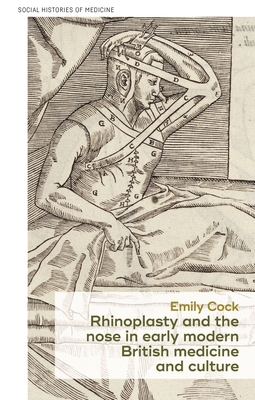
Rhinoplasty and the Nose in Early Modern British Medicine and Culture
AUTHOR
Cock, Emily; Waddington, Keir; Cantor, David
PUBLISHER
Manchester University Press (01/11/2022)
PRODUCT TYPE
Paperback(Paperback)
Description
Challenging histories of plastic surgery that posit a complete disappearance of Gaspare Tagliacozzi's rhinoplasty operation after his death in 1599, Rhinoplasty and the nose in early modern British medicine and culture traces knowledge of the procedure within the early modern British medical community, through to its impact on the nineteenth-century revival of skin-flap facial surgeries. The book explores why such a procedure was controversial, and the cultural importance of the nose, offering critical readings of literary noses from Shakespeare to Laurence Sterne. Medical knowledge of the graft operation was accompanied by a spurious story that the nose would be constructed from flesh purchased from a social inferior, and would drop off when that person died. The volume therefore explores this narrative in detail for its role in the procedure's stigmatisation, its engagement with the doctrine of medical sympathy, and its unique attempt to commoditise living human flesh.
This book explores experiences with and responses to the surgical reconstruction of the nose in seventeenth- and eighteenth-century Britain, examining the concerns and possibilities raised by the idea of 'nose transplants' in this period. Challenging histories of plastic surgery that posit a complete disappearance of pioneering Italian plastic surgeon Gaspare Tagliacozzi's reconstructive operation after his death in 1599, the book traces the actual extent of this knowledge within the medical community in order to uncover why such a procedure was anathema to early modern British culture. Medical knowledge of Tagliacozzi's grafting technique was overtaken by a spurious story that the transplanted nose would be constructed from flesh purchased from a social inferior that dropped off when the donor died. The volume explores this popular, widely related narrative in detail to examine its role in the procedure's stigmatisation, its engagement with the doctrine of medical sympathy, and its unique attempt to commoditise living human flesh. Utilising medical research and book histories alongside literary criticism, Rhinoplasty and the nose in early modern British medicine and culture historicises key modern questions about the commodification and limits of the human body, the impact of popular culture on medical practice, and the ethical connotations of bodily modification as response to stigma.
Challenging histories of plastic surgery that posit a complete disappearance of Gaspare Tagliacozzi's rhinoplasty operation after his death in 1599, Rhinoplasty and the nose in early modern British medicine and culture traces knowledge of the procedure within the early modern British medical community, through to its impact on the nineteenth-century revival of skin-flap facial surgeries. The book explores why such a procedure was controversial, and the cultural importance of the nose, offering critical readings of literary noses from Shakespeare to Laurence Sterne. Medical knowledge of the graft operation was accompanied by a spurious story that the nose would be constructed from flesh purchased from a social inferior, and would drop off when that person died. The volume therefore explores this narrative in detail for its role in the procedure's stigmatisation, its engagement with the doctrine of medical sympathy, and its unique attempt to commoditise living human flesh.