
Back to Search
ISBN 9781534734678 is currently unpriced. Please contact us for pricing.
Available options are listed below:

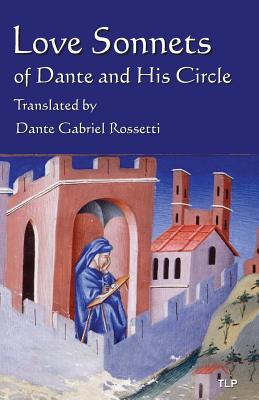
Love Sonnets of Dante and His Circle: Translated by Dante Gabriel Rossetti

AUTHOR Alighieri, Dante; Rossetti, Dante Gabriel
PUBLISHER Createspace Independent Publishing Platform (05/31/2016)
PRODUCT TYPE Paperback (Paperback)

Description
Born in London to highly cultured Italian parents, the poet Dante Gabriel Rossetti was a passionate translator of the poetry of Dante Alighieri and his contemporaries. The Langley Press selection includes love sonnets not included in Dante's Vita Nuova, and others by poets including Guido Cavalcanti, Guido Orlandi and Cecco Angliolieri.
Show More
Product Format
Product Details
ISBN-13: 9781534734678
ISBN-10: 1534734678
Binding: Paperback or Softback (Trade Paperback (Us))
Content Language: English
More Product Details
Page Count: 64
Carton Quantity: 110
Product Dimensions: 5.51 x 0.15 x 8.50 inches
Weight: 0.20 pound(s)
Country of Origin: US
Subject Information
BISAC Categories
Poetry | Ancient & Classical
Descriptions, Reviews, Etc.
publisher marketing
Born in London to highly cultured Italian parents, the poet Dante Gabriel Rossetti was a passionate translator of the poetry of Dante Alighieri and his contemporaries. The Langley Press selection includes love sonnets not included in Dante's Vita Nuova, and others by poets including Guido Cavalcanti, Guido Orlandi and Cecco Angliolieri.
Show More

Author: Alighieri, Dante
Dante Alighieri was an Italian poet of the Middle Ages, best known for his masterpiece, the epic Divine Comedy, considered to be one of the greatest poetic works in literature.

A native of Florence, Dante was deeply involved in his city-state s politics and had political, as well as poetic, ambitions. He was exiled from Florence in 1301 for backing the losing faction in a dispute over the pope s influence, and never saw Florence again.

While in exile, Dante wrote the Comedy, the tale of the poet s pilgrimage through Hell, Purgatory, and Paradise. To reach the largest possible audience for the work, Dante devised a version of Italian based largely on his own Tuscan dialect and incorporating Latin and parts of other regional dialects. In so doing, he demonstrated the vernacular s fitness for artistic expression, and earned the title Father of the Italian language.

Dante died in Ravenna in 1321, and his body remains there despite the fact that Florence erected a tomb for him in 1829.

Show More
Paperback