
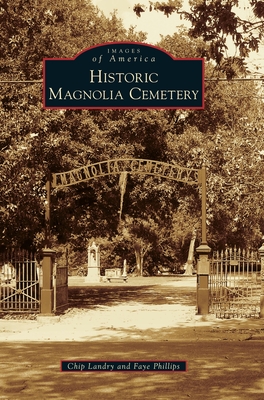
Historic Magnolia Cemetery
| AUTHOR | Landry, Chip; Phillips, Faye |
| PUBLISHER | Arcadia Publishing Library Editions (07/22/2019) |
| PRODUCT TYPE | Hardcover (Hardcover) |
Description
New settlements require proper resting places for their dead. Around 1763, British troops officially gained control of Baton Rouge and established a small fort on the Mississippi River there. However, since 1719, soldiers and white explorers had been buried near Native American mounds. Baton Rouge citizens were buried in the military cemetery near the fort, which accommodated Protestants; on private property; in Our Lady of Sorrows Catholic Cemetery, opened in 1792; and in Highland Cemetery, so named in 1819. These downtown cemeteries had overflowed by 1850. A municipal, nondenominational cemetery was critically needed. Land on the eastern edge of town, dotted with magnolia trees, was purchased by the government, and Magnolia Cemetery easily became its name. Families of all races, religious affiliations, and economic status rest in Magnolia. Confederate and Union soldiers died there on August 5, 1862, and some became permanent residents. Historic Magnolia Cemetery's subterranean graves are accentuated by plain or elaborate headstones or simple footstones, sarcophagi, and numerous statues.
Show More
Product Format
Product Details
ISBN-13:
9781540239570
ISBN-10:
1540239578
Binding:
Hardback or Cased Book (Sewn)
Content Language:
English
More Product Details
Page Count:
130
Carton Quantity:
44
Product Dimensions:
6.69 x 0.38 x 9.61 inches
Weight:
0.91 pound(s)
Country of Origin:
US
Subject Information
BISAC Categories
History | United States - State & Local - South (AL,AR,FL,GA,KY,LA,MS,
History | Buildings - Landmarks & Monuments
Dewey Decimal:
976.318
Descriptions, Reviews, Etc.
publisher marketing
New settlements require proper resting places for their dead. Around 1763, British troops officially gained control of Baton Rouge and established a small fort on the Mississippi River there. However, since 1719, soldiers and white explorers had been buried near Native American mounds. Baton Rouge citizens were buried in the military cemetery near the fort, which accommodated Protestants; on private property; in Our Lady of Sorrows Catholic Cemetery, opened in 1792; and in Highland Cemetery, so named in 1819. These downtown cemeteries had overflowed by 1850. A municipal, nondenominational cemetery was critically needed. Land on the eastern edge of town, dotted with magnolia trees, was purchased by the government, and Magnolia Cemetery easily became its name. Families of all races, religious affiliations, and economic status rest in Magnolia. Confederate and Union soldiers died there on August 5, 1862, and some became permanent residents. Historic Magnolia Cemetery's subterranean graves are accentuated by plain or elaborate headstones or simple footstones, sarcophagi, and numerous statues.
Show More
List Price $31.99
Your Price
$31.67