
ISBN 9781546767039 is currently unpriced. Please contact us for pricing.
Available options are listed below:
Available options are listed below:
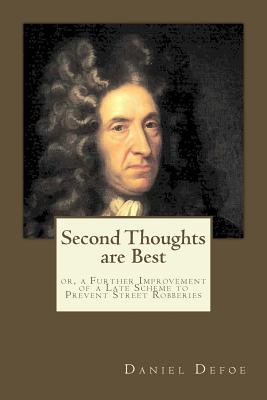
Second Thoughts are Best: or, a Further Improvement of a Late Scheme to Prevent Street Robberies
| AUTHOR | Defoe, Daniel; Gouveia, Andrea |
| PUBLISHER | Createspace Independent Publishing Platform (05/18/2017) |
| PRODUCT TYPE | Paperback (Paperback) |
Description
Second Thoughts Are Best: or, a Further Improvement of a Late Scheme to Prevent Street Robberies is a 1729 pamphlet by Daniel Defoe. He wrote it under the name of Andrew Moreton Esq., presented as a dissatisfied middle-class old man extremely concerned about the increase in criminality around the 1720s.As in other essays, such as Every-body's Business, Is No-Body's Business (1725), The Protestant Monastery (1726), Parochial Tyranny (1727) and Augusta Triumphans (1728), Moreton here inquiries into a range of different social and moral issues: the increase in highway robberies, the inefficiency of the night watch, the wicked trade of gin shops, and the "infestation" of prostitutes, beggars, and vagrants all around London. Moreton's declared intention is "to break up street-robbers, nest and egg", providing practical solutions for a reformation of the night watch, manners, places and even the theatre, reforms which would improve the quality of life.
Show More
Product Format
Product Details
ISBN-13:
9781546767039
ISBN-10:
1546767037
Binding:
Paperback or Softback (Trade Paperback (Us))
Content Language:
English
More Product Details
Page Count:
26
Carton Quantity:
314
Product Dimensions:
6.00 x 0.05 x 9.00 inches
Weight:
0.11 pound(s)
Country of Origin:
US
Subject Information
BISAC Categories
Social Science | Criminology
Descriptions, Reviews, Etc.
publisher marketing
Second Thoughts Are Best: or, a Further Improvement of a Late Scheme to Prevent Street Robberies is a 1729 pamphlet by Daniel Defoe. He wrote it under the name of Andrew Moreton Esq., presented as a dissatisfied middle-class old man extremely concerned about the increase in criminality around the 1720s.As in other essays, such as Every-body's Business, Is No-Body's Business (1725), The Protestant Monastery (1726), Parochial Tyranny (1727) and Augusta Triumphans (1728), Moreton here inquiries into a range of different social and moral issues: the increase in highway robberies, the inefficiency of the night watch, the wicked trade of gin shops, and the "infestation" of prostitutes, beggars, and vagrants all around London. Moreton's declared intention is "to break up street-robbers, nest and egg", providing practical solutions for a reformation of the night watch, manners, places and even the theatre, reforms which would improve the quality of life.
Show More