
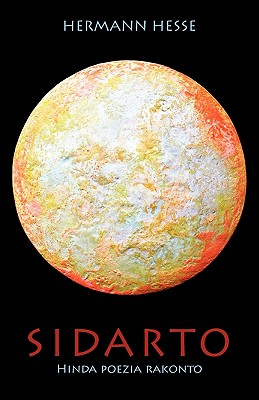
Sidarto. Hinda Poezia Rakonto (Tradukita Al Esperanto)
| AUTHOR | Karthaus, Detlef; Hesse, Hermann |
| PUBLISHER | MONDIAL (06/24/2010) |
| PRODUCT TYPE | Paperback (Paperback) |
Description
"Sidarto" ("Siddhartha") is an allegorical novel by German writer Hermann Hesse that deals with the spiritual journey of a boy (and man) during the time of the Buddha. -- En 1922, post multjara okupigho pri hinduismo kaj budhismo, la germana kaj svisa verkisto Hermann Hesse (1877-1962; Nobel-premio en 1946) publikigis sian romanon "Sidarto. Hinda poezia rakonto". La eventoj en la libro kondukas nin proksimume al la jaro 500 a.K., al la tempo de la fondinto de budhismo, Gotamo Budho. Ni sekvas la vivon de samtempulo de Gotamo, Sidarto, kaj ties serchon de atmano, t.e. de la nedetruebla, unueca kaj eterna esenco de la spirito. La romano, konsistanta el du partoj kun kvar kaj ok chapitroj, strukture pli-malpli sekvas bazajn principojn de la budhisma instruo, la "Kvar noblajn verojn" kaj la "Noblan okeran vojon". -- "Sidarto" estas la nau'a romano de Hermann Hesse. Ghi estas rigardata de kelkaj kiel simpligita priskribo de hindaj religioj kaj filozofioj el okcidenta vidpunkto, sed entuziasme akceptita de aliaj kiel kreema literatura interpreto de budhismaj principoj; kaj la usona verkisto Henry Miller ech konstatis: "Krei Budhon, kiu superas la ghenerale akceptitan Budhon, estas nekredebla faro, ghuste por germano." -- La traduko de Detlef Karthaus nuancite redonas la simplecon kaj poeziecon de la germana originalo.
Show More
Product Format
Product Details
ISBN-13:
9781595691750
ISBN-10:
1595691758
Binding:
Paperback or Softback (Trade Paperback (Us))
Content Language:
Esperanto
More Product Details
Page Count:
128
Carton Quantity:
62
Product Dimensions:
5.50 x 0.30 x 8.50 inches
Weight:
0.38 pound(s)
Country of Origin:
US
Subject Information
BISAC Categories
Fiction | Literary
Dewey Decimal:
FIC
Library of Congress Control Number:
2015374720
Descriptions, Reviews, Etc.
publisher marketing
"Sidarto" ("Siddhartha") is an allegorical novel by German writer Hermann Hesse that deals with the spiritual journey of a boy (and man) during the time of the Buddha. -- En 1922, post multjara okupigho pri hinduismo kaj budhismo, la germana kaj svisa verkisto Hermann Hesse (1877-1962; Nobel-premio en 1946) publikigis sian romanon "Sidarto. Hinda poezia rakonto". La eventoj en la libro kondukas nin proksimume al la jaro 500 a.K., al la tempo de la fondinto de budhismo, Gotamo Budho. Ni sekvas la vivon de samtempulo de Gotamo, Sidarto, kaj ties serchon de atmano, t.e. de la nedetruebla, unueca kaj eterna esenco de la spirito. La romano, konsistanta el du partoj kun kvar kaj ok chapitroj, strukture pli-malpli sekvas bazajn principojn de la budhisma instruo, la "Kvar noblajn verojn" kaj la "Noblan okeran vojon". -- "Sidarto" estas la nau'a romano de Hermann Hesse. Ghi estas rigardata de kelkaj kiel simpligita priskribo de hindaj religioj kaj filozofioj el okcidenta vidpunkto, sed entuziasme akceptita de aliaj kiel kreema literatura interpreto de budhismaj principoj; kaj la usona verkisto Henry Miller ech konstatis: "Krei Budhon, kiu superas la ghenerale akceptitan Budhon, estas nekredebla faro, ghuste por germano." -- La traduko de Detlef Karthaus nuancite redonas la simplecon kaj poeziecon de la germana originalo.
Show More
Author:
Hesse, Hermann
When this German novelist, poet, and essayist publicly denounced the savagery and hatred of World War I, he was considered a traitor. He moved to Switzerland where he eventually became a naturalized citizen. He warned of the advent of World War II, predicting that cultureless efficiency would destroy the modern world. His theme is the conflict between the elements of a person's dual nature and the problem of spiritual loneliness. His first novel, Peter Camenzind, was published in 1904. His masterpiece, Death and the Lover (1930), contrasts a scholarly abbot and his beloved pupil, who leaves the monastery for the adventurous world. Steppenwolf (1927), a European bestseller, was published when defeated Germany had begun to plan for another war. It is the story of Haller, who recognizes in himself the blend of the human and wolfish traits of the completely sterile scholarly project. Hesse won the Nobel Prize in 1946. During the 1960s Hesse became a favorite writer of the counter culture, especially in the United States, though his critical reputation has never equaled his popularity. Hermann Hesse died in 1962.
Show More
Your Price
$23.10