
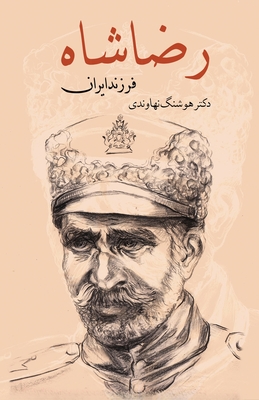
Reza Shah, The Son of Iran
| AUTHOR | Nahavandi, Hooshang |
| PUBLISHER | Ketab Corp (10/25/2024) |
| PRODUCT TYPE | Paperback (Paperback) |
This book is a political biography of a man who rose from among the people and when our Iran was collapsing and in distress, he saved it and took it to the path of progress and pride. Eight decades after the end of his reign, we see that almost everything in Iran was founded during his reign and without the slightest foreign help. In this book, you read: "Reza was not created to be a simple Kazakh and an obedient official in an army where his commander and superior officers are foreigners." He could not accept that the commands and commands he had to obey were in Russian and not Persian. Obedience to the principles of foreigners is not removed. Another Iranian, with order and order and another government with other goals, wanted the authority of its affairs to be with the Iranians. (p. 13) "Before the end of Reza Shah's reign, the west-to-east railway had reached from Tehran to Shahroud, and from the capital to Qazvin, Zanjan, and then Mianeh. The Russians bombed and destroyed some of the half-finished stations and the rest of these two routes, which were then rebuilt. Also, the construction of the Tehran to Isfahan-Kerman and Bandar Abbas railway began, which reached Qom in Shahrivar 20. .." (p. 215) "Before the third March coup, Iran had no banking and monetary institutions. On May 14, 1304, the first Iranian bank was established to manage the affairs and existence of Qashon's pension, and it was named Pahlavi Bank, which was then renamed Sepeh Bank and became one of the largest, perhaps the second, banks in the country. "I ran down the stairs and rushed to the reception. The signs of fatigue and sadness were visible on their faces, and they were so tired and depressed that they leaned on me completely when climbing the stairs, and I actually carried them up the stairs. I guided His Highness to the room that was allocated for his reception and rest. All family members gathered around the king. No one said a word and sadness rained from all the faces. His Highness said in a gentle tone: Don't be sad, grief breaks a person, be patient and tolerant. "
This book is a political biography of a man who rose from among the people and when our Iran was collapsing and in distress, he saved it and took it to the path of progress and pride. Eight decades after the end of his reign, we see that almost everything in Iran was founded during his reign and without the slightest foreign help. In this book, you read: "Reza was not created to be a simple Kazakh and an obedient official in an army where his commander and superior officers are foreigners." He could not accept that the commands and commands he had to obey were in Russian and not Persian. Obedience to the principles of foreigners is not removed. Another Iranian, with order and order and another government with other goals, wanted the authority of its affairs to be with the Iranians. (p. 13) "Before the end of Reza Shah's reign, the west-to-east railway had reached from Tehran to Shahroud, and from the capital to Qazvin, Zanjan, and then Mianeh. The Russians bombed and destroyed some of the half-finished stations and the rest of these two routes, which were then rebuilt. Also, the construction of the Tehran to Isfahan-Kerman and Bandar Abbas railway began, which reached Qom in Shahrivar 20. .." (p. 215) "Before the third March coup, Iran had no banking and monetary institutions. On May 14, 1304, the first Iranian bank was established to manage the affairs and existence of Qashon's pension, and it was named Pahlavi Bank, which was then renamed Sepeh Bank and became one of the largest, perhaps the second, banks in the country. "I ran down the stairs and rushed to the reception. The signs of fatigue and sadness were visible on their faces, and they were so tired and depressed that they leaned on me completely when climbing the stairs, and I actually carried them up the stairs. I guided His Highness to the room that was allocated for his reception and rest. All family members gathered around the king. No one said a word and sadness rained from all the faces. His Highness said in a gentle tone: Don't be sad, grief breaks a person, be patient and tolerant. "