
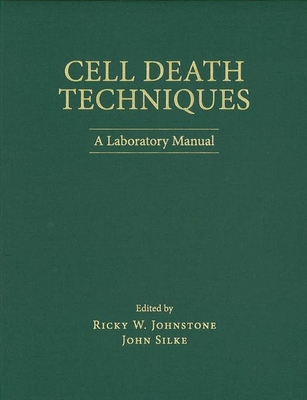
Cell Death Techniques: A Laboratory Manual
| AUTHOR | Silke, John; Johnstone, Ricky; Silke, John et al. |
| PUBLISHER | Cold Spring Harbor Laboratory Press (09/30/2015) |
| PRODUCT TYPE | Hardcover (Hardcover) |
Description
Regulated cell death, which is involved in nearly every aspect of animal development and physiology, can be challenging to study in the laboratory. There are multiple types of cell death, several interconnected signaling pathways can be activated, and the postmortem consequences may vary. Therefore, a combination of specialized techniques is often required to characterize and confirm cell death in the system of interest. This laboratory manual provides a comprehensive suite of step-by-step protocols for inducing, detecting, visualizing, characterizing, and quantifying cell death in a variety of systems. The contributors describe strategies for identifying and evaluating the biochemical and morphological changes that occur during apoptosis, autophagy, necrosis, and other forms of cell death, as well as for pinpointing the genes and proteins that may be involved. The protocols employ flow cytometry, imaging and microscopy, RNAi, western blotting, enzymatic activity measurements, and other tools to assess phenomena such as DNA fragmentation, lysosomal membrane permeabilization, autophagic flux, apoptosome or ripoptosome formation, caspase activation, and cytochrome c release. Techniques are described for both in vitro systems and in vivo models, including mice, C. elegans, and Drosophila. The authors also provide guidance on interpreting and presenting the results of cell death experiments, as well as advice on complementary procedures that may be required to confirm the results of a given experiment. This indispensable laboratory resource will enable all cell and developmental biologists, from the graduate level upward, to confidently carry out and comprehend a wide array of cell viability assays.
Show More
Product Format
Product Details
ISBN-13:
9781621820123
ISBN-10:
1621820122
Binding:
Hardback or Cased Book (Sewn)
Content Language:
English
More Product Details
Page Count:
514
Carton Quantity:
7
Product Dimensions:
8.60 x 1.30 x 11.20 inches
Weight:
4.20 pound(s)
Feature Codes:
Dust Cover
Country of Origin:
US
Subject Information
BISAC Categories
Science | Life Sciences - Biochemistry
Science | Life Sciences - Cell Biology
Science | Life Sciences - Human Anatomy & Physiology
Dewey Decimal:
571.936
Library of Congress Control Number:
2015020016
Descriptions, Reviews, Etc.
publisher marketing
Regulated cell death, which is involved in nearly every aspect of animal development and physiology, can be challenging to study in the laboratory. There are multiple types of cell death, several interconnected signaling pathways can be activated, and the postmortem consequences may vary. Therefore, a combination of specialized techniques is often required to characterize and confirm cell death in the system of interest. This laboratory manual provides a comprehensive suite of step-by-step protocols for inducing, detecting, visualizing, characterizing, and quantifying cell death in a variety of systems. The contributors describe strategies for identifying and evaluating the biochemical and morphological changes that occur during apoptosis, autophagy, necrosis, and other forms of cell death, as well as for pinpointing the genes and proteins that may be involved. The protocols employ flow cytometry, imaging and microscopy, RNAi, western blotting, enzymatic activity measurements, and other tools to assess phenomena such as DNA fragmentation, lysosomal membrane permeabilization, autophagic flux, apoptosome or ripoptosome formation, caspase activation, and cytochrome c release. Techniques are described for both in vitro systems and in vivo models, including mice, C. elegans, and Drosophila. The authors also provide guidance on interpreting and presenting the results of cell death experiments, as well as advice on complementary procedures that may be required to confirm the results of a given experiment. This indispensable laboratory resource will enable all cell and developmental biologists, from the graduate level upward, to confidently carry out and comprehend a wide array of cell viability assays.
Show More
List Price $35.00
Your Price
$34.65