
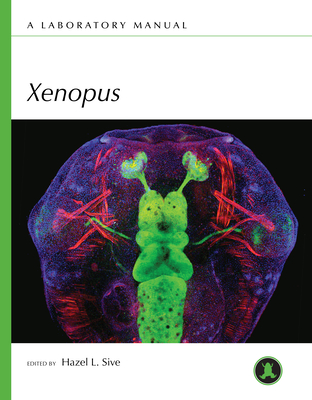
Xenopus: A Laboratory Manual
| AUTHOR | Sive, Hazel L.; Sive, Hazel L.; Sive, Hazel L. et al. |
| PUBLISHER | Cold Spring Harbor Laboratory Press (05/31/2023) |
| PRODUCT TYPE | Paperback (Paperback) |
Description
Members of the frog Xenopus genus are versatile model organisms used in developmental biology, cell biology, neuroscience, and toxicology research, among others. Frogs are easy to rear and maintain, and large sample sizes of embryos and later stages are readily obtained. Studies using Xenopus cell-free extracts, oocytes, eggs, embryos, larval stages, and adult frogs have yielded important insights into a multitude of key biological processes from mechanisms underlying the cell cycle to embryonic development to human disease. This new laboratory manual provides a comprehensive collection of experimental procedures for research using Xenopus. It includes basic methods for Xenopus husbandry, egg harvesting, embryo collection, microdissection, and visualization, as well as strategies for extract preparation, genetic manipulation, genomic analysis, transcriptomics, and proteomics. There are protocols for analyses of Xenopus immunology, neurobiology, metamorphosis, and adult physiology. Toxicological studies and chemical screening methods are also included. The manual covers both Xenopus laevis and the smaller Xenopus tropicalis species. It is a critical reference for laboratories that currently work with these organisms and will serve as an essential start-up guide for those seeking to start using Xenopus frogs in their research for the first time.
Show More
Product Format
Product Details
ISBN-13:
9781621821809
ISBN-10:
1621821803
Binding:
Paperback or Softback (Trade Paperback (Us))
Content Language:
English
More Product Details
Page Count:
1092
Carton Quantity:
4
Product Dimensions:
11.50 x 3.30 x 8.50 inches
Weight:
6.30 pound(s)
Feature Codes:
Bibliography,
Index,
Price on Product,
Illustrated
Country of Origin:
US
Subject Information
BISAC Categories
Science | Life Sciences - Developmental Biology
Science | Life Sciences - Zoology - Mammals
Science | Reptiles, Amphibians & Terrariums
Dewey Decimal:
639.378
Library of Congress Control Number:
2022949627
Descriptions, Reviews, Etc.
publisher marketing
Members of the frog Xenopus genus are versatile model organisms used in developmental biology, cell biology, neuroscience, and toxicology research, among others. Frogs are easy to rear and maintain, and large sample sizes of embryos and later stages are readily obtained. Studies using Xenopus cell-free extracts, oocytes, eggs, embryos, larval stages, and adult frogs have yielded important insights into a multitude of key biological processes from mechanisms underlying the cell cycle to embryonic development to human disease. This new laboratory manual provides a comprehensive collection of experimental procedures for research using Xenopus. It includes basic methods for Xenopus husbandry, egg harvesting, embryo collection, microdissection, and visualization, as well as strategies for extract preparation, genetic manipulation, genomic analysis, transcriptomics, and proteomics. There are protocols for analyses of Xenopus immunology, neurobiology, metamorphosis, and adult physiology. Toxicological studies and chemical screening methods are also included. The manual covers both Xenopus laevis and the smaller Xenopus tropicalis species. It is a critical reference for laboratories that currently work with these organisms and will serve as an essential start-up guide for those seeking to start using Xenopus frogs in their research for the first time.
Show More
List Price $42.00
Your Price
$41.58