
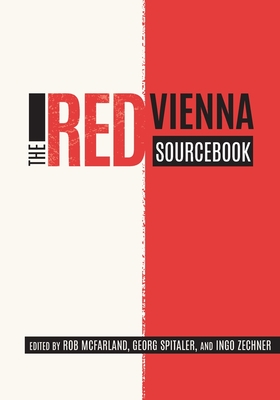
The Red Vienna Sourcebook
| PUBLISHER | Camden House (NY) (10/01/2020) |
| PRODUCT TYPE | Paperback (Paperback) |
The current blockbuster German TV series Babylon Berlin introduces viewers to the tumultuous period in German history known as the Weimar Republic. Critics have praised the series for its relevance to the present: it shows dark populist forces undermining a fragile democracy. While Weimar Germany makes a fascinating backdrop, its story does not inspire much hope for our present-day political and cultural woes.
A fascinating contrast is the Austrian capital, Vienna. After the First World War the former imperial city elected a Social Democratic majority that persisted into the 1930s. "Red Vienna" undertook large-scale experiments in public housing, hygiene, and education, while maintaining a world-class presence in music, literature, art, culture, and science. Though Red Vienna eventually fell victim to fascist violence, it left a rich legacy with potential to inform our own tumultuous times.
The Red Vienna Sourcebook provides scholars and students with an encyclopedic selection of key documents from the period, carefully translated and introduced. The thirty-six chapters include primary works from canonical names such as Sigmund Freud and Arthur Schnitzler but also introductions to lesser-known figures such as sociologist Käthe Leichter and health-policy pioneer Julius Tandler. The documents will be of interest to such diverse disciplines as economics, architecture, music, film history, philosophy, women's studies, sports and body culture, and Jewish studies.
Rob McFarland is Professor of German Literature, Film and Culture at Brigham Young University. Georg Spitaler is a researcher at the Austrian Labor History Society. Ingo Zechner is Director of the Ludwig Boltzmann Institute for Digital History.
The current blockbuster German TV series Babylon Berlin introduces viewers to the tumultuous period in German history known as the Weimar Republic. Critics have praised the series for its relevance to the present: it shows dark populist forces undermining a fragile democracy. While Weimar Germany makes a fascinating backdrop, its story does not inspire much hope for our present-day political and cultural woes.
A fascinating contrast is the Austrian capital, Vienna. After the First World War the former imperial city elected a Social Democratic majority that persisted into the 1930s. "Red Vienna" undertook large-scale experiments in public housing, hygiene, and education, while maintaining a world-class presence in music, literature, art, culture, and science. Though Red Vienna eventually fell victim to fascist violence, it left a rich legacy with potential to inform our own tumultuous times.
The Red Vienna Sourcebook provides scholars and students with an encyclopedic selection of key documents from the period, carefully translated and introduced. The thirty-six chapters include primary works from canonical names such as Sigmund Freud and Arthur Schnitzler but also introductions to lesser-known figures such as sociologist Käthe Leichter and health-policy pioneer Julius Tandler. The documents will be of interest to such diverse disciplines as economics, architecture, music, film history, philosophy, women's studies, sports and body culture, and Jewish studies.
Rob McFarland is Professor of German Literature, Film and Culture at Brigham Young University. Georg Spitaler is a researcher at the Austrian Labor History Society. Ingo Zechner is Director of the Ludwig Boltzmann Institute for Digital History.