
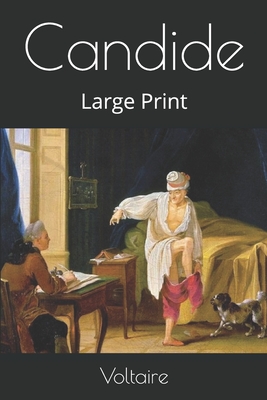
ISBN 9781674137162 is currently unpriced. Please contact us for pricing.
Available options are listed below:
Available options are listed below:
Candide: Large Print
| AUTHOR | Voltaire |
| PUBLISHER | Independently Published (12/11/2019) |
| PRODUCT TYPE | Paperback (Paperback) |
Description
Candide, ou l'Optimisme (1759) is a French satire by the Enlightenment philosopher Voltaire, English translations of which have been titled Candide: Or, All for the Best (1759); Candide: Or, The Optimist (1762); and Candide: Or, Optimism (1947). The novella begins with a young man, Candide, who is living a sheltered life in an Edenic paradise and being indoctrinated with Leibnizian optimism (or simply optimism) by his tutor, Pangloss. The work describes the abrupt cessation of this existence, followed by Candide's slow, painful disillusionment as he witnesses and experiences great hardships in the world. Voltaire concludes with Candide, if not outright rejecting optimism, advocating an enigmatic precept, "we must cultivate our garden", in lieu of the Leibnizian mantra of Pangloss, "all is for the best in the best of all possible worlds".
Show More
Product Format
Product Details
ISBN-13:
9781674137162
ISBN-10:
1674137168
Binding:
Paperback or Softback (Trade Paperback (Us))
Content Language:
English
More Product Details
Page Count:
274
Carton Quantity:
26
Product Dimensions:
6.00 x 0.62 x 9.00 inches
Weight:
0.89 pound(s)
Country of Origin:
US
Subject Information
BISAC Categories
Philosophy | General
Accelerated Reader:
Reading Level:
7.3
Point Value:
5
Interest Level:
Upper Grade
Descriptions, Reviews, Etc.
publisher marketing
Candide, ou l'Optimisme (1759) is a French satire by the Enlightenment philosopher Voltaire, English translations of which have been titled Candide: Or, All for the Best (1759); Candide: Or, The Optimist (1762); and Candide: Or, Optimism (1947). The novella begins with a young man, Candide, who is living a sheltered life in an Edenic paradise and being indoctrinated with Leibnizian optimism (or simply optimism) by his tutor, Pangloss. The work describes the abrupt cessation of this existence, followed by Candide's slow, painful disillusionment as he witnesses and experiences great hardships in the world. Voltaire concludes with Candide, if not outright rejecting optimism, advocating an enigmatic precept, "we must cultivate our garden", in lieu of the Leibnizian mantra of Pangloss, "all is for the best in the best of all possible worlds".
Show More