
ISBN 9781721119394 is currently unpriced. Please contact us for pricing.
Available options are listed below:
Available options are listed below:
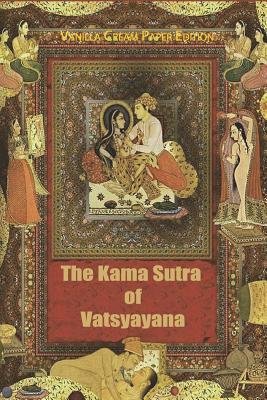
The Kama Sutra of Vatsyayana
| AUTHOR | Vatsyayana |
| PUBLISHER | Createspace Independent Publishing Platform (06/13/2018) |
| PRODUCT TYPE | Paperback (Paperback) |
Description
Rare edition with unique illustrations and elegant classic cream paper. The Kama Sutra is an ancient Indian Hindu 1] 2] text widely considered to be the standard work on human sexual behavior in Sanskrit literature written by Vatsyayana. A portion of the work consists of practical advice on sexual intercourse. It is largely in prose, with many inserted anustubh poetry verses. "Kama" which is one of the four goals of Hindu life, means desire including sexual desire the latter being the subject of the textbook, and "sutra" literally means a thread or line that holds things together, and more metaphorically refers to an aphorism (or line, rule, formula), or a collection of such aphorisms in the form of a manual. Contrary to popular perception, especially in the western world, Kama sutra is not exclusively a sex manual; it presents itself as a guide to a virtuous and gracious living that discusses the nature of love, family life and other aspects pertaining to pleasure oriented faculties of human life. Kama Sutra, in parts of the world, is presumed or depicted as a synonym for creative sexual positions; in reality, only 20% of Kama Sutra is about sexual positions. The majority of the book, notes Jacob Levy, is about the philosophy and theory of love, what triggers desire, what sustains it, how and when it is good or bad. The Kama Sutra is the oldest and most notable of a group of texts known generically as Kama Shastra Historians attribute Kamasutra to be composed between 400 BCE and 200 CE. John Keay says that the Kama Sutra is a compendium that was collected into its present form in the 2nd century CE Includes unique illustrations
Show More
Product Format
Product Details
ISBN-13:
9781721119394
ISBN-10:
1721119396
Binding:
Paperback or Softback (Trade Paperback (Us))
Content Language:
English
More Product Details
Page Count:
300
Carton Quantity:
24
Product Dimensions:
5.98 x 0.67 x 9.02 inches
Weight:
0.97 pound(s)
Feature Codes:
Illustrated
Country of Origin:
US
Subject Information
BISAC Categories
Literary Collections | General
Literary Collections | General
Literary Collections | Education
Descriptions, Reviews, Etc.
publisher marketing
Rare edition with unique illustrations and elegant classic cream paper. The Kama Sutra is an ancient Indian Hindu 1] 2] text widely considered to be the standard work on human sexual behavior in Sanskrit literature written by Vatsyayana. A portion of the work consists of practical advice on sexual intercourse. It is largely in prose, with many inserted anustubh poetry verses. "Kama" which is one of the four goals of Hindu life, means desire including sexual desire the latter being the subject of the textbook, and "sutra" literally means a thread or line that holds things together, and more metaphorically refers to an aphorism (or line, rule, formula), or a collection of such aphorisms in the form of a manual. Contrary to popular perception, especially in the western world, Kama sutra is not exclusively a sex manual; it presents itself as a guide to a virtuous and gracious living that discusses the nature of love, family life and other aspects pertaining to pleasure oriented faculties of human life. Kama Sutra, in parts of the world, is presumed or depicted as a synonym for creative sexual positions; in reality, only 20% of Kama Sutra is about sexual positions. The majority of the book, notes Jacob Levy, is about the philosophy and theory of love, what triggers desire, what sustains it, how and when it is good or bad. The Kama Sutra is the oldest and most notable of a group of texts known generically as Kama Shastra Historians attribute Kamasutra to be composed between 400 BCE and 200 CE. John Keay says that the Kama Sutra is a compendium that was collected into its present form in the 2nd century CE Includes unique illustrations
Show More