
ISBN 9781721532971 is currently unpriced. Please contact us for pricing.
Available options are listed below:
Available options are listed below:
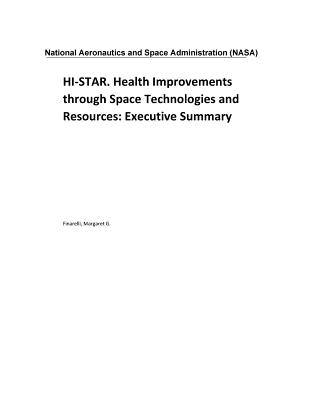
Hi-Star. Health Improvements Through Space Technologies and Resources: Executive Summary
| AUTHOR | Administration (Nasa), National Aeronaut |
| PUBLISHER | Createspace Independent Publishing Platform (06/20/2018) |
| PRODUCT TYPE | Paperback (Paperback) |
Description
Our mission is to develop and promote a global strategy to help combat malaria using space technology. Like the tiny yet powerful mosquito, HI-STAR (Health Improvements Through Space Technologies and Resources) is a small program that aspires to make a difference. Timely detection of malaria danger zones is essential to help health authorities and policy makers make decisions about how to manage limited resources for combating malaria. In 2001, the technical support network for prevention and control of malaria epidemics published a study. HI-STAR focuses on malaria because it is the most common and deadly of the vector-borne diseases. Malaria also shares many commonalities with other diseases, which means the global strategy developed here may also be applicable to other parasitic diseases. HI-STAR would like to contribute to the many malaria groups already making great strides in the fight against malaria. Some examples include: Roll Back Malaria, The Special Program for Research and Training in Tropical Diseases (TDR) and the Multilateral Initiative on Malaria (MIM). Other important groups that are among the first to include space technologies in their model include: The Center for Health Application of Aerospace Related Technologies (CHAART) and Mapping Malaria Risk in Africa (MARA). Malaria is a complex and multi-faceted disease. Combating it must therefore be equally versatile. HI-STAR incorporates an interdisciplinary, international, intercultural approach.called 'Malaria Early Warning Systems; Concepts, Indicators and Partners.' This study, funded by Roll Back Malaria, a World Health Organization initiative, offers a framework for a monitoring and early warning system. HI-STAR seeks to build on this proposal and enhance the space elements of the suggested framework. It is the work of fifty-three professionals and students from the International Space University's 2002 Summer Session Program held in California, USA. Finarelli, Margaret G. Stennis Space Center
Show More
Product Format
Product Details
ISBN-13:
9781721532971
ISBN-10:
1721532978
Binding:
Paperback or Softback (Trade Paperback (Us))
Content Language:
English
More Product Details
Page Count:
30
Carton Quantity:
136
Product Dimensions:
8.50 x 0.06 x 11.00 inches
Weight:
0.21 pound(s)
Country of Origin:
US
Subject Information
BISAC Categories
Reference | Research
Descriptions, Reviews, Etc.
publisher marketing
Our mission is to develop and promote a global strategy to help combat malaria using space technology. Like the tiny yet powerful mosquito, HI-STAR (Health Improvements Through Space Technologies and Resources) is a small program that aspires to make a difference. Timely detection of malaria danger zones is essential to help health authorities and policy makers make decisions about how to manage limited resources for combating malaria. In 2001, the technical support network for prevention and control of malaria epidemics published a study. HI-STAR focuses on malaria because it is the most common and deadly of the vector-borne diseases. Malaria also shares many commonalities with other diseases, which means the global strategy developed here may also be applicable to other parasitic diseases. HI-STAR would like to contribute to the many malaria groups already making great strides in the fight against malaria. Some examples include: Roll Back Malaria, The Special Program for Research and Training in Tropical Diseases (TDR) and the Multilateral Initiative on Malaria (MIM). Other important groups that are among the first to include space technologies in their model include: The Center for Health Application of Aerospace Related Technologies (CHAART) and Mapping Malaria Risk in Africa (MARA). Malaria is a complex and multi-faceted disease. Combating it must therefore be equally versatile. HI-STAR incorporates an interdisciplinary, international, intercultural approach.called 'Malaria Early Warning Systems; Concepts, Indicators and Partners.' This study, funded by Roll Back Malaria, a World Health Organization initiative, offers a framework for a monitoring and early warning system. HI-STAR seeks to build on this proposal and enhance the space elements of the suggested framework. It is the work of fifty-three professionals and students from the International Space University's 2002 Summer Session Program held in California, USA. Finarelli, Margaret G. Stennis Space Center
Show More