
ISBN 9781721628377 is currently unpriced. Please contact us for pricing.
Available options are listed below:
Available options are listed below:
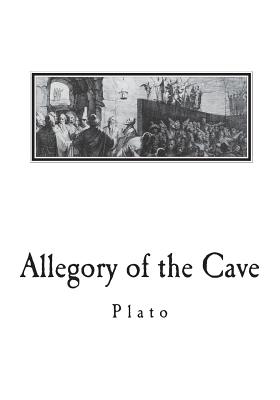
Allegory of the Cave: From The Republic by Plato
| AUTHOR | Jowett, Benjamin; Jowett, Benjamin; Plato |
| PUBLISHER | Createspace Independent Publishing Platform (06/19/2018) |
| PRODUCT TYPE | Paperback (Paperback) |
Description
Allegory of the Cave by Plato from The Republic by Plato and translated by Benjamin Jowett. The Allegory of the Cave, or Plato's Cave, was presented by the Greek philosopher Plato in his work Republic to compare "the effect of education and the lack of it on our nature". It is written as a dialogue between Plato's brother Glaucon and his mentor Socrates, narrated by the latter. The allegory is presented after the analogy of the sun and the analogy of the divided line. All three are characterized in relation to dialectic at the end of Books VII and VIII. Plato has Socrates describe a group of people who have lived chained to the wall of a cave all of their lives, facing a blank wall. The people watch shadows projected on the wall from objects passing in front of a fire behind them, and give names to these shadows. The shadows are the prisoners' reality. Socrates explains how the philosopher is like a prisoner who is freed from the cave and comes to understand that the shadows on the wall are not reality at all, for he can perceive the true form of reality rather than the manufactured reality that is the shadows seen by the prisoners.
Show More
Product Format
Product Details
ISBN-13:
9781721628377
ISBN-10:
1721628371
Binding:
Paperback or Softback (Trade Paperback (Us))
Content Language:
English
More Product Details
Page Count:
70
Carton Quantity:
58
Product Dimensions:
7.01 x 0.14 x 10.00 inches
Weight:
0.30 pound(s)
Country of Origin:
US
Subject Information
BISAC Categories
Philosophy | Political
Descriptions, Reviews, Etc.
publisher marketing
Allegory of the Cave by Plato from The Republic by Plato and translated by Benjamin Jowett. The Allegory of the Cave, or Plato's Cave, was presented by the Greek philosopher Plato in his work Republic to compare "the effect of education and the lack of it on our nature". It is written as a dialogue between Plato's brother Glaucon and his mentor Socrates, narrated by the latter. The allegory is presented after the analogy of the sun and the analogy of the divided line. All three are characterized in relation to dialectic at the end of Books VII and VIII. Plato has Socrates describe a group of people who have lived chained to the wall of a cave all of their lives, facing a blank wall. The people watch shadows projected on the wall from objects passing in front of a fire behind them, and give names to these shadows. The shadows are the prisoners' reality. Socrates explains how the philosopher is like a prisoner who is freed from the cave and comes to understand that the shadows on the wall are not reality at all, for he can perceive the true form of reality rather than the manufactured reality that is the shadows seen by the prisoners.
Show More