
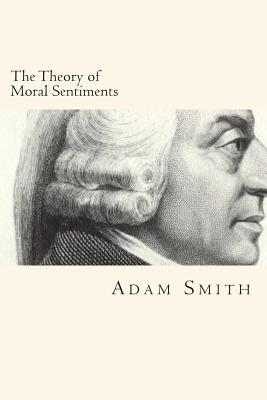
ISBN 9781722117177 is currently unpriced. Please contact us for pricing.
Available options are listed below:
Available options are listed below:
The Theory of Moral Sentiments
| AUTHOR | Smith, Adam |
| PUBLISHER | Createspace Independent Publishing Platform (07/01/2018) |
| PRODUCT TYPE | Paperback (Paperback) |
Description
Broadly speaking, Smith followed the views of his mentor, Francis Hutcheson of the University of Glasgow, who divided moral philosophy into four parts: Ethics and Virtue; Private rights and Natural liberty; Familial rights (called Economics); and State and Individual rights (called Politics). Hutcheson had abandoned the psychological view of moral philosophy, claiming that motives were too fickle to be used as a basis for a philosophical system. Instead, he hypothesised a dedicated "sixth sense" to explain morality. This idea, to be taken up by David Hume (see Hume's A Treatise of Human Nature), claimed that man is pleased by utility. Smith rejected his teacher's reliance on this special sense. Starting in about 1741, Smith set on the task of using Hume's experimental method (appealing to human experience) to replace the specific moral sense with a pluralistic approach to morality based on a multitude of psychological motives. The Theory of Moral Sentiments begins with the following assertion: How selfish soever man may be supposed, there are evidently some principles in his nature, which interest him in the fortunes of others, and render their happiness necessary to him, though he derives nothing from it, except the pleasure of seeing it. Of this kind is pity or compassion, the emotion we feel for the misery of others, when we either see it, or are made to conceive it in a very lively manner. That we often derive sorrow from the sorrows of others, is a matter of fact too obvious to require any instances to prove it; for this sentiment, like all the other original passions of human nature, is by no means confined to the virtuous or the humane, though they perhaps may feel it with the most exquisite sensibility. The greatest ruffian, the most hardened violator of the laws of society, is not altogether without it.
Show More
Product Format
Product Details
ISBN-13:
9781722117177
ISBN-10:
1722117176
Binding:
Paperback or Softback (Trade Paperback (Us))
Content Language:
English
More Product Details
Page Count:
316
Carton Quantity:
24
Product Dimensions:
6.00 x 0.66 x 9.00 inches
Weight:
0.93 pound(s)
Country of Origin:
US
Subject Information
BISAC Categories
Self-Help | Motivational & Inspirational
Self-Help | Ethics & Moral Philosophy
Accelerated Reader:
Reading Level:
0
Point Value:
0
Guided Reading Level:
Not Applicable
Descriptions, Reviews, Etc.
publisher marketing
Broadly speaking, Smith followed the views of his mentor, Francis Hutcheson of the University of Glasgow, who divided moral philosophy into four parts: Ethics and Virtue; Private rights and Natural liberty; Familial rights (called Economics); and State and Individual rights (called Politics). Hutcheson had abandoned the psychological view of moral philosophy, claiming that motives were too fickle to be used as a basis for a philosophical system. Instead, he hypothesised a dedicated "sixth sense" to explain morality. This idea, to be taken up by David Hume (see Hume's A Treatise of Human Nature), claimed that man is pleased by utility. Smith rejected his teacher's reliance on this special sense. Starting in about 1741, Smith set on the task of using Hume's experimental method (appealing to human experience) to replace the specific moral sense with a pluralistic approach to morality based on a multitude of psychological motives. The Theory of Moral Sentiments begins with the following assertion: How selfish soever man may be supposed, there are evidently some principles in his nature, which interest him in the fortunes of others, and render their happiness necessary to him, though he derives nothing from it, except the pleasure of seeing it. Of this kind is pity or compassion, the emotion we feel for the misery of others, when we either see it, or are made to conceive it in a very lively manner. That we often derive sorrow from the sorrows of others, is a matter of fact too obvious to require any instances to prove it; for this sentiment, like all the other original passions of human nature, is by no means confined to the virtuous or the humane, though they perhaps may feel it with the most exquisite sensibility. The greatest ruffian, the most hardened violator of the laws of society, is not altogether without it.
Show More
Author:
Smith, Adam
Adam Smith was born in a small village in Kirkcaldy, Scotland in 1723. He entered the University of Glasgow at age fourteen, and later attended Balliol College at Oxford. After lecturing for a period, he held several teaching positions at Glasgow University. His greatest achievement was writing The Wealth of Nations (1776), a five-book series that sought to expose the true causes of prosperity, and installed him as the father of contemporary economic thought. He died in Edinburgh on July 19, 1790.
Show More