
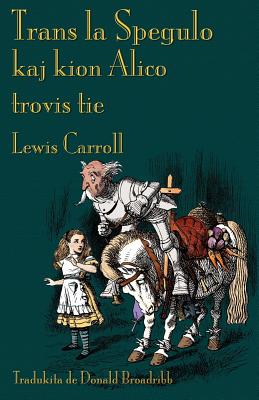
Trans la Spegulo kaj kion Alico trovis tie: Through the Looking-Glass in Esperanto
| AUTHOR | Tenniel, John; Carroll, Lewis; Broadribb, Donald |
| PUBLISHER | Evertype (06/21/2012) |
| PRODUCT TYPE | Paperback (Paperback) |
Description
"Alice's Adventures in Wonderland" estas somera rakonto, unue publikigita de Lewis Carroll (plum-nomo de Charles Lutwidge Dodgson) en julio 1865. Multaj el la personoj kaj aventuroj en tiu libro baziĝas sur ludkartaro, ekzemple la malbonhumora Reĝino de Keroj. "Through the Looking-Glass and What Alice Found There", alimane, estas vintra rakonto, unue publikigita de Carroll en decembro 1871, en kiu la plejmulto de la personaro kaj aventuroj baziĝas sur ŝakludo. (Du personoj el la unua historio, la Marta Leporo kaj la Ĉapelisto, denove aperas en la dua sub aspekto de mesaĝistoj de la Blanka Reĝo, Haigha kaj Hatta.) En "Through the Looking-Glass" Carroll ankaŭ pli celas al plenaĝaj legantoj ol en sia antaŭa libro, uzante pli da vortludado kaj logikaj paradoksoj. Ĉe la fino de tiu ĉi libro oni ankaŭ trovos la "subpremitan" epizodon "La Vespo en Peruko". Carroll originale intencis ke ĉi tio estu parto de Ĉapitro VIII de "Through the Looking-Glass", sed li forigis ĝin nelonge antaŭ publikigado pro la instigo de John Tenniel, ilustristo de la unuaj eldonoj de ambaŭ verkoj. La Esperanta traduko de "Through the Looking-Glass" de Donald Broadribb estis unue eldonita de Bookleaf Publishing (Beverley, Okcidenta Aŭstralio) en 1996, sub la titolo "Tra la Spegulo kaj kion Alico trovis tie". Ĉi tiu verko de Broadribb restas la sola kompleta Esperanta traduko de "Through the Looking-Glass", kvankam aliuloj estas tradukintaj kelkajn el la unuopaj poemoj en la libro, plej notinde "Jabberwocky", kiu ekzistas en ne malpli ol kvar Esperantaj versioj krom tiu de Broadribb. Ĉi tiuj kvar tradukoj aperas ĉi-volume en apendicoj post "La Vespo en Peruko". -- "Alice's Adventures in Wonderland" is a summer tale, published by Lewis Carroll (pen-name of Charles Lutwidge Dodgson) for the first time in July 1865. Many of the characters and adventures in that book are based on a pack of playing cards, such as the ill-tempered Queen of Hearts. "Through the Looking-Glass and What Alice Found There", on the other hand, is a winter tale, first published by Carroll in December 1871, in which most of the characters and adventures are based on the game of chess. (Two characters from the first tale, the March Hare and the Hatter, reappear in the second in the guise of the White King's messengers, Haigha and Hatta.) "Through the Looking-Glass" is also more a book for adults than than its predecessor, featuring more word-play and logical paradoxes. At the end of the book you will also find the "suppressed" episode "The Wasp in a Wig". This was originally intended to be part of Chapter VIII of "Through the Looking-Glass", but Carroll omitted it shortly before publication at the urging of John Tenniel, who illustrated the first editions of both books. Donald Broadribb's Esperanto translation of "Through the Looking-Glass" was first published by Bookleaf Publishing (Beverley, Western Australia) in 1996, under the title "Tra la Spegulo kaj kion Alico trovis tie". To date Broadribb's work remains the only Esperanto translation of Carroll's sequel, though several of the individual poems in "Through the Looking-Glass" have been translated by others, most notably "Jabber-wocky", which exists in no fewer than four Esperanto versions besides Broadribb's. These four translations are presented in this volume as appendices following "The Wasp in a Wig".
Show More
Product Format
Product Details
ISBN-13:
9781782010012
ISBN-10:
1782010017
Binding:
Paperback or Softback (Trade Paperback (Us))
Content Language:
Esperanto
More Product Details
Page Count:
180
Carton Quantity:
44
Product Dimensions:
5.50 x 0.41 x 8.50 inches
Weight:
0.52 pound(s)
Country of Origin:
US
Subject Information
BISAC Categories
Juvenile Fiction | Classics
Juvenile Fiction | Fantasy & Magic
Dewey Decimal:
823.8
Descriptions, Reviews, Etc.
annotation
Esperanto translation of "Through the Looking Glass and What Alice Found There." The text is more for adults than its predecessor, featuring more word play and logical paradoxes.
Show More
publisher marketing
"Alice's Adventures in Wonderland" estas somera rakonto, unue publikigita de Lewis Carroll (plum-nomo de Charles Lutwidge Dodgson) en julio 1865. Multaj el la personoj kaj aventuroj en tiu libro baziĝas sur ludkartaro, ekzemple la malbonhumora Reĝino de Keroj. "Through the Looking-Glass and What Alice Found There", alimane, estas vintra rakonto, unue publikigita de Carroll en decembro 1871, en kiu la plejmulto de la personaro kaj aventuroj baziĝas sur ŝakludo. (Du personoj el la unua historio, la Marta Leporo kaj la Ĉapelisto, denove aperas en la dua sub aspekto de mesaĝistoj de la Blanka Reĝo, Haigha kaj Hatta.) En "Through the Looking-Glass" Carroll ankaŭ pli celas al plenaĝaj legantoj ol en sia antaŭa libro, uzante pli da vortludado kaj logikaj paradoksoj. Ĉe la fino de tiu ĉi libro oni ankaŭ trovos la "subpremitan" epizodon "La Vespo en Peruko". Carroll originale intencis ke ĉi tio estu parto de Ĉapitro VIII de "Through the Looking-Glass", sed li forigis ĝin nelonge antaŭ publikigado pro la instigo de John Tenniel, ilustristo de la unuaj eldonoj de ambaŭ verkoj. La Esperanta traduko de "Through the Looking-Glass" de Donald Broadribb estis unue eldonita de Bookleaf Publishing (Beverley, Okcidenta Aŭstralio) en 1996, sub la titolo "Tra la Spegulo kaj kion Alico trovis tie". Ĉi tiu verko de Broadribb restas la sola kompleta Esperanta traduko de "Through the Looking-Glass", kvankam aliuloj estas tradukintaj kelkajn el la unuopaj poemoj en la libro, plej notinde "Jabberwocky", kiu ekzistas en ne malpli ol kvar Esperantaj versioj krom tiu de Broadribb. Ĉi tiuj kvar tradukoj aperas ĉi-volume en apendicoj post "La Vespo en Peruko". -- "Alice's Adventures in Wonderland" is a summer tale, published by Lewis Carroll (pen-name of Charles Lutwidge Dodgson) for the first time in July 1865. Many of the characters and adventures in that book are based on a pack of playing cards, such as the ill-tempered Queen of Hearts. "Through the Looking-Glass and What Alice Found There", on the other hand, is a winter tale, first published by Carroll in December 1871, in which most of the characters and adventures are based on the game of chess. (Two characters from the first tale, the March Hare and the Hatter, reappear in the second in the guise of the White King's messengers, Haigha and Hatta.) "Through the Looking-Glass" is also more a book for adults than than its predecessor, featuring more word-play and logical paradoxes. At the end of the book you will also find the "suppressed" episode "The Wasp in a Wig". This was originally intended to be part of Chapter VIII of "Through the Looking-Glass", but Carroll omitted it shortly before publication at the urging of John Tenniel, who illustrated the first editions of both books. Donald Broadribb's Esperanto translation of "Through the Looking-Glass" was first published by Bookleaf Publishing (Beverley, Western Australia) in 1996, under the title "Tra la Spegulo kaj kion Alico trovis tie". To date Broadribb's work remains the only Esperanto translation of Carroll's sequel, though several of the individual poems in "Through the Looking-Glass" have been translated by others, most notably "Jabber-wocky", which exists in no fewer than four Esperanto versions besides Broadribb's. These four translations are presented in this volume as appendices following "The Wasp in a Wig".
Show More
Author:
Carroll, Lewis
Lewis Carroll was the pen name of Charles Lutwidge Dodgson, an English writer, mathematician, Anglican deacon, and photographer. Best known for his classics Alice s Adventures in Wonderland, Through the Looking Glass, and Jabberwocky, Carroll was also an accomplished inventor who created an early version of what is today known as Scrabble. The publication of Alice s Adventures in Wonderland in 1865 brought Carroll a certain level of fame, although he continued to supplement his income through his work as a mathematics tutor at Christ Church, Oxford College. Carroll s whimsical characters and nonsensical verse resonated with Victorian-era readers, and his books continue to be enjoyed by numerous modern societies dedicated to his promoting his works.
Show More
Illustrator:
Tenniel, John
Sir John Tenniel briefly attended the Royal Academy Schools, but for the most part he was a self taught artist. His illustrations appeared regularly in Punch, but it was the Alice books that confirmed his international reputation as an illustrator. Tenniel was knighted in 1893.
Show More
List Price $15.95
Your Price
$15.79