
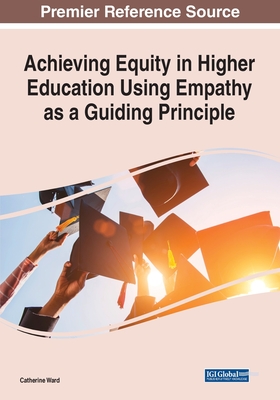
Achieving Equity in Higher Education Using Empathy as a Guiding Principle
| PUBLISHER | Information Science Reference (04/15/2022) |
| PRODUCT TYPE | Paperback (Paperback) |
Description
The assertion that empathy is an essential characteristic of equity work in higher education demands educators operate from a place of justice, fairness, and inclusive practice. Empathy is a personal quality that allows educators to consider another's perspective to inform the decision-making process about policy, procedures, program and service design, and teaching pedagogy. Thus, engaging empathy in everyday practice supports the potential to create more equitable and inclusive environments as well as standards for serving a diverse student population. Achieving Equity in Higher Education Using Empathy as a Guiding Principle explores what empathy is, how empathy can be developed, and how empathy can be applied in an educator's practice to achieve equity-mindedness and mitigate inequitable student outcomes in and out of the classroom. The book also argues that self-examination and engaging empathy is a way to thoughtfully examine differences and uphold the values of humanity. Covering topics such as intercultural listening and program development, this reference work is ideal for administrators, practitioners, academicians, scholars, researchers, instructors, and students.
Show More
Product Format
Product Details
ISBN-13:
9781799897477
ISBN-10:
1799897478
Binding:
Paperback or Softback (Trade Paperback (Us))
Content Language:
English
More Product Details
Page Count:
372
Carton Quantity:
11
Product Dimensions:
7.00 x 0.77 x 10.00 inches
Weight:
1.42 pound(s)
Feature Codes:
Bibliography,
Index,
Illustrated
Country of Origin:
US
Subject Information
BISAC Categories
Education | Inclusive Education
Education | Leadership
Education | Schools - Levels - Higher
Dewey Decimal:
378.101
Library of Congress Control Number:
2021052921
Descriptions, Reviews, Etc.
publisher marketing
The assertion that empathy is an essential characteristic of equity work in higher education demands educators operate from a place of justice, fairness, and inclusive practice. Empathy is a personal quality that allows educators to consider another's perspective to inform the decision-making process about policy, procedures, program and service design, and teaching pedagogy. Thus, engaging empathy in everyday practice supports the potential to create more equitable and inclusive environments as well as standards for serving a diverse student population. Achieving Equity in Higher Education Using Empathy as a Guiding Principle explores what empathy is, how empathy can be developed, and how empathy can be applied in an educator's practice to achieve equity-mindedness and mitigate inequitable student outcomes in and out of the classroom. The book also argues that self-examination and engaging empathy is a way to thoughtfully examine differences and uphold the values of humanity. Covering topics such as intercultural listening and program development, this reference work is ideal for administrators, practitioners, academicians, scholars, researchers, instructors, and students.
Show More
List Price $165.00
Your Price
$163.35