
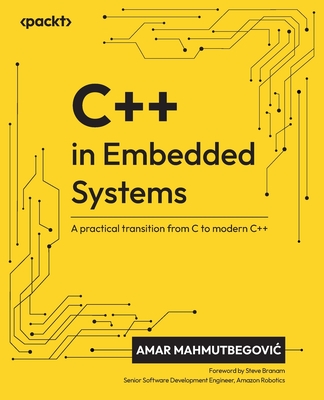
C++ in Embedded Systems: A practical transition from C to modern C++
| AUTHOR | Mahmutbegovic, Amar; Branam, Steve |
| PUBLISHER | Packt Publishing (07/02/2025) |
| PRODUCT TYPE | Paperback (Paperback) |
Go beyond C by applying modern C++ in embedded systems to enhance code readability, maintainability, and scalability
Key Features:
- Bridge the gap between C and modern C++ for embedded systems through practical examples
- Learn how to save memory and cut down on runtime computing using compile-time computation techniques
- Improve your software design skills by applying patterns to solve common problems in embedded systems using C++
- Purchase of the print or Kindle book includes a free PDF eBook
Book Description:
Transitioning from C can be daunting, with concerns about performance overhead, added complexity, and unfamiliar tooling. Addressing these challenges, Amar Mahmutbegovic, an advocate for modern C++ in embedded development, shows you how to harness zero-cost abstractions, compile-time checks, and powerful modern C++ capabilities to preserve performance while achieving safer, cleaner code. This book bridges the gap between traditional C and advanced C++, helping you retain the efficiency C developers demand while unlocking the safety and expressiveness of modern C++.
Starting with a modern development environment setup, including a Docker container for seamless example replication, you'll overcome the hurdles of using the C++ standard library in memory-constrained settings and get acquainted with the Embedded Template Library (ETL) as an alternative. The book walks you through essential C++ concepts before exploring advanced topics such as templates, strong typing, error handling, compile-time computation, and RAII. Through practical examples, you'll implement a sequencer, write a type-safe HAL, and apply patterns like Command, State, and Observer to solve common embedded development problems.
By the end of this book, you'll have learned how to apply modern C++ to develop robust, modular firmware with performance matching or exceeding hand-coded C solutions.
What You Will Learn:
- Debunk myths and misconceptions about using C++ in embedded systems
- Set up build automation tailored for C++ in constrained environments
- Leverage strong typing to improve type safety
- Apply modern C++ techniques, such as Resource Acquisition Is Initialization (RAII)
- Use Domain Specific Language (DSL) with a practical example using Boost SML
- Implement software development best practices, including the SOLID principle, in embedded development
Who this book is for:
This book is for embedded developers who primarily use C and want to adopt a modern C++ approach. It introduces fundamental C++ concepts, making it suitable for beginners, while also assuming basic familiarity to fully leverage advanced features like compile-time computation. Even those with prior C++ experience will discover new ways to apply modern best practices to write more efficient and maintainable embedded applications.
Table of Contents
- Debunking Common Myths about C++
- Challenges in Embedded Systems with Limited Resources
- Embedded C++ Ecosystem
- Setting Up the Development Environment for a C++ Embedded Project
- Classes - Building Blocks of C++ Applications
- Beyond Classes - Fundamental C++ Concepts
- Strengthening Firmware - Practical C++ Error Handling Methods
- Building Generic and Reusable Code with Templates
- Improving Type-Safety with Strong Types
- Writing Expressive Code with Lambdas
- Compile-Time Computation
- Writing C++ HAL
- Working with C Libraries
- Enhancing Super-Loop with Sequencer
- Practical Patterns - Building a Temperature Publisher
- Designing Scalable Finite State Machines
- Libraries and Frameworks
- Cross-Platform Development
Go beyond C by applying modern C++ in embedded systems to enhance code readability, maintainability, and scalability
Key Features:
- Bridge the gap between C and modern C++ for embedded systems through practical examples
- Learn how to save memory and cut down on runtime computing using compile-time computation techniques
- Improve your software design skills by applying patterns to solve common problems in embedded systems using C++
- Purchase of the print or Kindle book includes a free PDF eBook
Book Description:
Transitioning from C can be daunting, with concerns about performance overhead, added complexity, and unfamiliar tooling. Addressing these challenges, Amar Mahmutbegovic, an advocate for modern C++ in embedded development, shows you how to harness zero-cost abstractions, compile-time checks, and powerful modern C++ capabilities to preserve performance while achieving safer, cleaner code. This book bridges the gap between traditional C and advanced C++, helping you retain the efficiency C developers demand while unlocking the safety and expressiveness of modern C++.
Starting with a modern development environment setup, including a Docker container for seamless example replication, you'll overcome the hurdles of using the C++ standard library in memory-constrained settings and get acquainted with the Embedded Template Library (ETL) as an alternative. The book walks you through essential C++ concepts before exploring advanced topics such as templates, strong typing, error handling, compile-time computation, and RAII. Through practical examples, you'll implement a sequencer, write a type-safe HAL, and apply patterns like Command, State, and Observer to solve common embedded development problems.
By the end of this book, you'll have learned how to apply modern C++ to develop robust, modular firmware with performance matching or exceeding hand-coded C solutions.
What You Will Learn:
- Debunk myths and misconceptions about using C++ in embedded systems
- Set up build automation tailored for C++ in constrained environments
- Leverage strong typing to improve type safety
- Apply modern C++ techniques, such as Resource Acquisition Is Initialization (RAII)
- Use Domain Specific Language (DSL) with a practical example using Boost SML
- Implement software development best practices, including the SOLID principle, in embedded development
Who this book is for:
This book is for embedded developers who primarily use C and want to adopt a modern C++ approach. It introduces fundamental C++ concepts, making it suitable for beginners, while also assuming basic familiarity to fully leverage advanced features like compile-time computation. Even those with prior C++ experience will discover new ways to apply modern best practices to write more efficient and maintainable embedded applications.
Table of Contents
- Debunking Common Myths about C++
- Challenges in Embedded Systems with Limited Resources
- Embedded C++ Ecosystem
- Setting Up the Development Environment for a C++ Embedded Project
- Classes - Building Blocks of C++ Applications
- Beyond Classes - Fundamental C++ Concepts
- Strengthening Firmware - Practical C++ Error Handling Methods
- Building Generic and Reusable Code with Templates
- Improving Type-Safety with Strong Types
- Writing Expressive Code with Lambdas
- Compile-Time Computation
- Writing C++ HAL
- Working with C Libraries
- Enhancing Super-Loop with Sequencer
- Practical Patterns - Building a Temperature Publisher
- Designing Scalable Finite State Machines
- Libraries and Frameworks
- Cross-Platform Development