
ISBN 9781974082360 is currently unpriced. Please contact us for pricing.
Available options are listed below:
Available options are listed below:
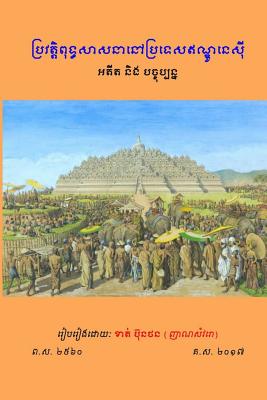
History of Buddhism in Indonesia: Past and Present
| AUTHOR | Bunthorn, Khath |
| PUBLISHER | Createspace Independent Publishing Platform (07/14/2017) |
| PRODUCT TYPE | Paperback (Paperback) |
Description
Buddhism came to Indonesia in the fifth century AD. Theravada Buddhism arrived and lived briefly in Indonesia. Subsequently, Mahayana and Vajrayana Buddhism had dominated Indonesia from seventh to fifteenth century during which Indonesia had close relations with India. On the arrival of Islam in Indonesian archipelago in the fifteenth century, Buddhism disappeared for five hundred years. In the twentieth century, Buddhism reappeared in Indonesia and the revival of Buddhism was first initiated by Indonesian monk Bhikkhu Ashin Jinarakkhita. In 1959, he invited thirteen senior monks from Cambodia, Thailand, Burma, and Sri Lanka to Indonesia to establish international Sima, to ordain Bhikkhus and Samaneras, and to celebrate Maha Visakha Puja at the nineteenth century Buddhist temple of Borobudur in Magelang, Cetral Java. In the presence, various forms of Buddhism have been followed and practiced by Indonesian Buddhists. However, Theravada Buddhism is the most popular sect of Buddhism in Indonesia. In pursuance to its national philosophy of Pancasila, Indonesian government recognised Buddhism as one of the six state religions in Indonesia and Visakha Puja officially became a national holiday. Tens of thousands of Buddhists observe this triple blessing ceremony at the world largest Buddhist temple of Borobudur annually. Therefore, this book explores the historical origin of Buddhism in Indonesia during the Srivijaya Kingdom, the Sailendra Dynasty, and the Majapahit Empire. It presents the causes of 500-year disappearance of Buddhism following the arrival of Islam in Indonesia. In the modern age, the process of the revival of Buddhism in connection with state's Pancasila ideology has been investigated in details. Moreover, the present practice of Buddhism by Indonesian Buddhists has been discussed, and particularly, how they could accommodate the Muslim-dominated Indonesia.
Show More
Product Format
Product Details
ISBN-13:
9781974082360
ISBN-10:
1974082369
Binding:
Paperback or Softback (Trade Paperback (Us))
Content Language:
Central Khmer
More Product Details
Page Count:
328
Carton Quantity:
22
Product Dimensions:
5.98 x 0.73 x 9.02 inches
Weight:
1.06 pound(s)
Country of Origin:
US
Subject Information
BISAC Categories
Religion | Buddhism - History
Descriptions, Reviews, Etc.
publisher marketing
Buddhism came to Indonesia in the fifth century AD. Theravada Buddhism arrived and lived briefly in Indonesia. Subsequently, Mahayana and Vajrayana Buddhism had dominated Indonesia from seventh to fifteenth century during which Indonesia had close relations with India. On the arrival of Islam in Indonesian archipelago in the fifteenth century, Buddhism disappeared for five hundred years. In the twentieth century, Buddhism reappeared in Indonesia and the revival of Buddhism was first initiated by Indonesian monk Bhikkhu Ashin Jinarakkhita. In 1959, he invited thirteen senior monks from Cambodia, Thailand, Burma, and Sri Lanka to Indonesia to establish international Sima, to ordain Bhikkhus and Samaneras, and to celebrate Maha Visakha Puja at the nineteenth century Buddhist temple of Borobudur in Magelang, Cetral Java. In the presence, various forms of Buddhism have been followed and practiced by Indonesian Buddhists. However, Theravada Buddhism is the most popular sect of Buddhism in Indonesia. In pursuance to its national philosophy of Pancasila, Indonesian government recognised Buddhism as one of the six state religions in Indonesia and Visakha Puja officially became a national holiday. Tens of thousands of Buddhists observe this triple blessing ceremony at the world largest Buddhist temple of Borobudur annually. Therefore, this book explores the historical origin of Buddhism in Indonesia during the Srivijaya Kingdom, the Sailendra Dynasty, and the Majapahit Empire. It presents the causes of 500-year disappearance of Buddhism following the arrival of Islam in Indonesia. In the modern age, the process of the revival of Buddhism in connection with state's Pancasila ideology has been investigated in details. Moreover, the present practice of Buddhism by Indonesian Buddhists has been discussed, and particularly, how they could accommodate the Muslim-dominated Indonesia.
Show More