
ISBN 9781979457033 is currently unpriced. Please contact us for pricing.
Available options are listed below:
Available options are listed below:
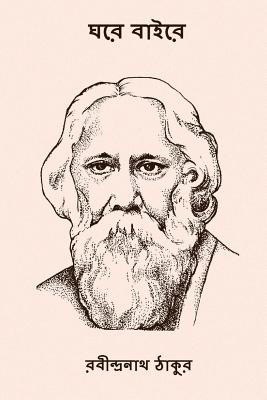
Ghare Baire ( Bengali Edition )
| AUTHOR | Tagore, Rabindranath |
| PUBLISHER | Createspace Independent Publishing Platform (11/05/2017) |
| PRODUCT TYPE | Paperback (Paperback) |
Description
Ghare Baire is a 1916 novel by Rabindranath Tagore. The book illustrates the battle Tagore had with himself, between the ideas of Western culture and revolution against the Western culture. These two ideas are portrayed in two of the main characters, Nikhil, who is rational and opposes violence, and Sandip, who will let nothing stand in his way from reaching his goals. These two opposing ideals are very important in understanding the history of the Bengal region and its contemporary problems. There is much controversy over whether or not Tagore was attempting to represent Gandhi with Sandip. Many argue that Tagore would not even venture to personify Gandhi in his characters because Tagore was a large admirer of Gandhi. Also, Gandhi was against violence, while Sandip would utilize violence to get what he wanted. The book shows "the clash between new and old, realism and idealism, the means and the end, good and evil" (p xxiv) within India and southern Asia. The novel was translated into English by the author's nephew, Surendranath Tagore, with input from the author, in 1919.
Show More
Product Format
Product Details
ISBN-13:
9781979457033
ISBN-10:
1979457034
Binding:
Paperback or Softback (Trade Paperback (Us))
Content Language:
Bengali
More Product Details
Page Count:
204
Carton Quantity:
38
Product Dimensions:
5.98 x 0.43 x 9.02 inches
Weight:
0.62 pound(s)
Country of Origin:
US
Subject Information
BISAC Categories
Fiction | Classics
Descriptions, Reviews, Etc.
publisher marketing
Ghare Baire is a 1916 novel by Rabindranath Tagore. The book illustrates the battle Tagore had with himself, between the ideas of Western culture and revolution against the Western culture. These two ideas are portrayed in two of the main characters, Nikhil, who is rational and opposes violence, and Sandip, who will let nothing stand in his way from reaching his goals. These two opposing ideals are very important in understanding the history of the Bengal region and its contemporary problems. There is much controversy over whether or not Tagore was attempting to represent Gandhi with Sandip. Many argue that Tagore would not even venture to personify Gandhi in his characters because Tagore was a large admirer of Gandhi. Also, Gandhi was against violence, while Sandip would utilize violence to get what he wanted. The book shows "the clash between new and old, realism and idealism, the means and the end, good and evil" (p xxiv) within India and southern Asia. The novel was translated into English by the author's nephew, Surendranath Tagore, with input from the author, in 1919.
Show More