
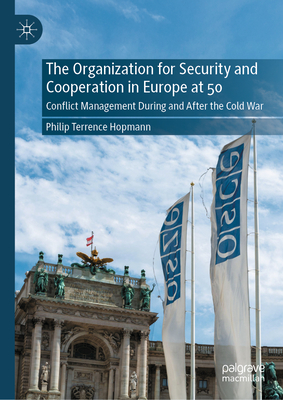
The Organization for Security and Cooperation in Europe at 50: Conflict Management During and After the Cold War
| AUTHOR | Hopmann, Philip Terrence |
| PUBLISHER | Palgrave MacMillan (07/11/2025) |
| PRODUCT TYPE | Hardcover (Hardcover) |
This book traces the development of the OSCE from the opening of negotiations in 1973 of the Helsinki Final Act up to its 50th anniversary in 2025, focusing on the transition from a bridge between Eastern and Western Europe (and the US and Canada) during the final 15 years of the Cold War to its post-Cold war focus on managing conflicts in the post-communist regions of Europe after the Cold War. It analyzes developments in this region as a competition between realist and liberal/institutionalist ideas, arguing that the OSCE was constructed by its participating states as a liberal international institution that has succumbed to a renewal of "realist" ideas and actions that have reappeared in the first 25 years of the 21st century and have thereby threatened its effectiveness in enhancing security, cooperation and peace in Europe, culminating with the Russian invasion of Ukraine.
This book traces the development of the OSCE from the opening of negotiations in 1973 of the Helsinki Final Act up to its 50th anniversary in 2025, focusing on the transition from a bridge between Eastern and Western Europe (and the US and Canada) during the final 15 years of the Cold War to its post-Cold war focus on managing conflicts in the post-communist regions of Europe after the Cold War. It analyzes developments in this region as a competition between realist and liberal/institutionalist ideas, arguing that the OSCE was constructed by its participating states as a liberal international institution that has succumbed to a renewal of "realist" ideas and actions that have reappeared in the first 25 years of the 21st century and have thereby threatened its effectiveness in enhancing security, cooperation and peace in Europe, culminating with the Russian invasion of Ukraine.