
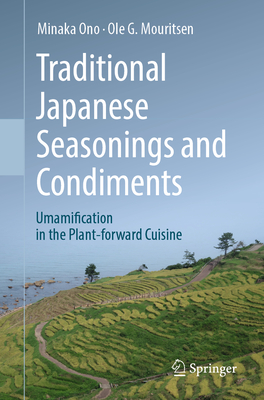
Traditional Japanese Seasonings and Condiments: Umamification in the Plant-Forward Cuisine
| AUTHOR | Ono, Minaka; Mouritsen, Ole G. |
| PUBLISHER | Springer (07/27/2025) |
| PRODUCT TYPE | Paperback (Paperback) |
Changes in eating behaviour towards a more plant-forward and sustainable diet require ways to prepare and impart, e.g., vegetables with those tastes, in particular umami, that humans crave as an evolutionary trait, but which plants generally lack due to fundamental plant biology. Food cultures like the traditional Japanese and other vegetarian or flexitarian Asian food cultures have over millennia developed means to umamify vegetables. This book describes such means in terms of powerful Japanese umami-rich condiments and points out how the use of these easily can by transitioned from traditional Japanese cuisine to apply in other food cultures where the challenge is to increase consumption of plant-based foods and cut down on meat without compromising taste. The book advocates that a flexitarian approach will be the most effective way to promote a sustainable plant-forward diet and eating behaviour to scale.
Changes in eating behaviour towards a more plant-forward and sustainable diet require ways to prepare and impart, e.g., vegetables with those tastes, in particular umami, that humans crave as an evolutionary trait, but which plants generally lack due to fundamental plant biology. Food cultures like the traditional Japanese and other vegetarian or flexitarian Asian food cultures have over millennia developed means to umamify vegetables. This book describes such means in terms of powerful Japanese umami-rich condiments and points out how the use of these easily can by transitioned from traditional Japanese cuisine to apply in other food cultures where the challenge is to increase consumption of plant-based foods and cut down on meat without compromising taste. The book advocates that a flexitarian approach will be the most effective way to promote a sustainable plant-forward diet and eating behaviour to scale.
Minaka Ono, MSc, is a Japanese researcher with a deep passion for integrating the learnings from traditional Japanese food culture into the green transition, exploring the intersection of culture, food, and sustainability.
Ole G. Mouritsen, PhD, DSc, DSc h.c., is a professor emeritus of gastrophysics and culinary food innovation at the University of Copenhagen. He is president of the Danish Gastronomical Academy and Japanese Cuisine Goodwill Ambassador.
This book is a superb guide to the myriad Japanese ways of creating and concentrating deliciousness: invaluable resources in today's world for anyone trying to eat more healthfully and sustainably. Harold McGee, author of On Food & Cooking: The Science & Lore of the Kitchen
A brilliant bridge between gastronomy and academia, this book offers a joyful, sustainable way of eating through Japan's umami culture. Essential reading for a deliciously responsible future. Ishida Masayoshi, Professor and dean at Ritsumeikan University, College of Gastronomy
A whisper of miso, a touch of shoyu, the quiet magic of fermentation... The timeless beauty of Japanese culinary heritage merge with the spirit of innovation, creating a sustainable and delicious future. Juan Carlos Arboleya, Professor at the Basque Culinary Institute
Changes in eating behaviour towards a more plant-forward and sustainable diet require ways to prepare and impart, e.g., vegetables with those tastes, in particular umami, that humans crave as an evolutionary trait, but which plants generally lack due to fundamental plant biology. Food cultures like the traditional Japanese and other vegetarian or flexitarian Asian food cultures have over millennia developed means to umamify vegetables. This book describes such means in terms of powerful Japanese umami-rich condiments and points out how the use of these easily can by transitioned from traditional Japanese cuisine to apply in other food cultures where the challenge is to increase consumption of plant-based foods and cut down on meat without compromising taste. The book advocates that a flexitarian approach will be the most effective way to promote a sustainable plant-forward diet and eating behaviour to scale.