
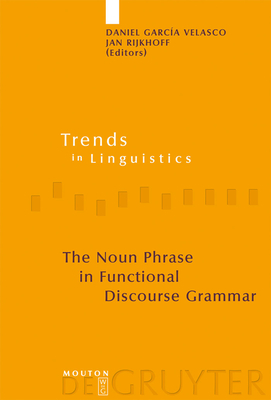
The Noun Phrase in Functional Discourse Grammar
| PUBLISHER | de Gruyter Mouton (02/27/2008) |
| PRODUCT TYPE | Hardcover (Hardcover) |
The articles in this volume analyse the noun phrase within the framework of Functional Discourse Grammar (FDG), the successor to Simon C. Dik's Functional Grammar. In its current form, FDG has an explicit top-down organization and distinguishes four hierarchically organized, interacting levels: (i) the interpersonal level (language as communicational process), (ii) the representational level (language as a carrier of content), (iii) the morphosyntactic level and (iv) the phonological level. Together they constitute the grammatical component, which in its turn interacts with a cognitive and a communicative component. This comprehensive approach to linguistic analysis is also reflected in this volume, which contains rich and substantial contributions concerning many different aspects of the noun phrase. At the same time, the analysis of a major linguistic construction from various perspectives is an excellent way to test a new model of grammar with regard to some of the standards of adequacy for linguistic theories.
The book contains several papers dealing with matters of representation and formalization of the noun phrase (the articles by Kees Hengeveld, José Luis González Escribano, Jan Rijkhoff and Evelien Keizer). Other contributors are more concerned with the practical application of the model with regard to discourse-interpersonal matters (Chris Butler, John H. Connolly), whereas the chapters by Dik Bakker and Roland Pfau and by Daniel García Velasco deal with morphosyntactic issues. In all, the variety of issues addressed and the range of languages considered prove that one of the important advantages of the FDG model is precisely the fact that grammatical phenomena can be treated from a semantic, pragmatic, morpho-syntactic, phonological or textual perspective in a coherent fashion.
The articles in this volume analyse the noun phrase within the framework of Functional Discourse Grammar (FDG), the successor to Simon C. Dik's Functional Grammar. In its current form, FDG has an explicit top-down organization and distinguishes four hierarchically organized, interacting levels: (i) the interpersonal level (language as communicational process), (ii) the representational level (language as a carrier of content), (iii) the morphosyntactic level and (iv) the phonological level. Together they constitute the grammatical component, which in its turn interacts with a cognitive and a communicative component. This comprehensive approach to linguistic analysis is also reflected in this volume, which contains rich and substantial contributions concerning many different aspects of the noun phrase. At the same time, the analysis of a major linguistic construction from various perspectives is an excellent way to test a new model of grammar with regard to some of the standards of adequacy for linguistic theories.
The book contains several papers dealing with matters of representation and formalization of the noun phrase (the articles by Kees Hengeveld, José Luis González Escribano, Jan Rijkhoff and Evelien Keizer). Other contributors are more concerned with the practical application of the model with regard to discourse-interpersonal matters (Chris Butler, John H. Connolly), whereas the chapters by Dik Bakker and Roland Pfau and by Daniel García Velasco deal with morphosyntactic issues. In all, the variety of issues addressed and the range of languages considered prove that one of the important advantages of the FDG model is precisely the fact that grammatical phenomena can be treated from a semantic, pragmatic, morpho-syntactic, phonological or textual perspective in a coherent fashion.
of Konstanz in Germany (1995). From 1990-5, Professor Rijkhoff was also a core member of Theme Group II (Constituent Order) in the European Science Foundation's 'Program in Language Typology "EUROTYP"'.