
Back to Search

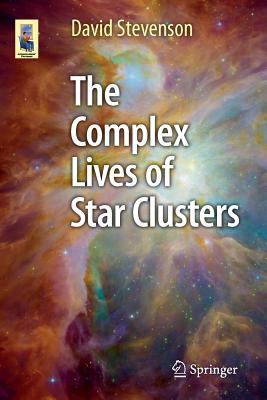
The Complex Lives of Star Clusters

AUTHOR Stevenson, David
PUBLISHER Springer (05/20/2015)
PRODUCT TYPE Paperback (Paperback)

Description
As with the author's recent books Extreme Explosions and Under a Crimson Sun, the complex topic of star clusters is broken down and made accessible with clear links to other areas of astronomy in a language which the non-specialist can easily read and enjoy. The full range of topics are addressed regarding how star clusters are formed. Why is it some are dense conglomerates of stars while others are looser associations? Are the young, brilliant clusters seen in neighboring galaxies such as the Large Magellanic Cloud, M33 or M82 analogous to the ancient globulars seen in the Milky Way? How will these clusters change as their stars wane and die? More interestingly, how does living in a dense star cluster affect the fates of the stars and any attendant planets that accompany them? Star clusters form many of the most dazzling objects in the astronomers' catalogs. Many amateur astronomers are interested in exploring how these objects are created and what it would be like to live among these objects. From the historical views of how star clusters came about to the most recent assumptions about how stars within these clusters evolve, different strands of science, from observation to theory, are woven together into a compelling investigation specifically targeted at amateur astronomers.
Show More
Product Format
Product Details
ISBN-13: 9783319142333
ISBN-10: 331914233X
Binding: Paperback or Softback (Trade Paperback (Us))
Content Language: English
More Product Details
Page Count: 343
Carton Quantity: 22
Product Dimensions: 6.14 x 0.75 x 9.21 inches
Weight: 1.11 pound(s)
Feature Codes: Glossary
Country of Origin: NL
Subject Information
BISAC Categories
Science | Space Science - Astronomy
Science | Physics - Astrophysics
Dewey Decimal: 520
Descriptions, Reviews, Etc.
jacket back

As with the author's recent books Extreme Explosions and Under a Crimson Sun, the complex topic of star clusters is broken down and made accessible with clear links to other areas of astronomy in a language which the non-specialist can easily read and enjoy. The full range of a star cluster's lifespan is depicted, as both globular and open clusters are tracked from birth to eventual death. Why is it some are dense conglomerates of stars while others are looser associations? Are the young, brilliant clusters seen in neighboring galaxies such as the Large Magellanic Cloud, M33 or M82 analogous to the ancient globulars seen in the Milky Way? How will these clusters change as their stars wane and die? More interestingly, how does living in a dense star cluster affect the fates of the stars and any attendant planets that accompany them?

Star clusters form many of the most dazzling objects in the astronomers' catalogs. Many amateur astronomers are interested in exploring how these objects are created and what it would be like to live among these objects. From the historical views of how star clusters came about to the most recent assumptions about how stars within these clusters evolve, different strands of science, from observation to theory, are woven together into a compelling investigation specifically targeted at amateur astronomers.

Show More
publisher marketing
As with the author's recent books Extreme Explosions and Under a Crimson Sun, the complex topic of star clusters is broken down and made accessible with clear links to other areas of astronomy in a language which the non-specialist can easily read and enjoy. The full range of topics are addressed regarding how star clusters are formed. Why is it some are dense conglomerates of stars while others are looser associations? Are the young, brilliant clusters seen in neighboring galaxies such as the Large Magellanic Cloud, M33 or M82 analogous to the ancient globulars seen in the Milky Way? How will these clusters change as their stars wane and die? More interestingly, how does living in a dense star cluster affect the fates of the stars and any attendant planets that accompany them? Star clusters form many of the most dazzling objects in the astronomers' catalogs. Many amateur astronomers are interested in exploring how these objects are created and what it would be like to live among these objects. From the historical views of how star clusters came about to the most recent assumptions about how stars within these clusters evolve, different strands of science, from observation to theory, are woven together into a compelling investigation specifically targeted at amateur astronomers.
Show More

Author: Stevenson, David
David K. Stevenson, MD is Vice Dean, Senior Associate Dean, and Harold K. Faber Professor of Pediatrics, Stanford University School of Medicine; and Director, Johnson Center for Pregnancy and Newborn Services, Lucile Packard Children's Hospital, Stanford, CA.
Philip Sunshine, MD, is Professor of Pediatrics Emeritus, Stanford University School of Medicine, Stanford, CA.
Ronald Cohen, MD, is Clinical Professor of Pediatrics, Stanford University School of Medicine, Stanford, CA.
Show More
List Price $44.99
Your Price  $44.54
Paperback