
Back to Search

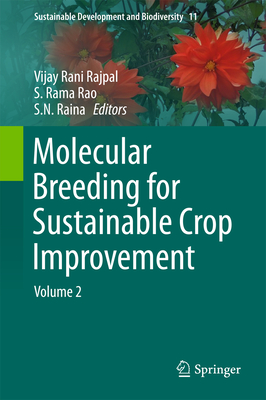
Molecular Breeding for Sustainable Crop Improvement, Volume 2

PUBLISHER Springer (02/12/2016)
PRODUCT TYPE Hardcover (Hardcover)

Description
The world population is estimated to reach to more than 10 billion by the year 2050. These projections pose a challenging situation for the agricultural scientists to increase crops productivity to meet the growing food demands. The unavailability and/or inaccessibility to appropriate gene pools with desired traits required to carry out genetic improvement of various crop species make this task formidable for the plant breeders. Incidentally, most of the desired genes reside in the wild genetic relatives of the crop species. Therefore, exploration and characterization of wild genetic resources of important crop species is vital for the efficient utilization of these gene pools for sustainable genetic improvements to assure food security. Further, understanding the myriad complexities of genic and genomic interactions among species, more particularly of wild relatives of crop species and/or phylogenetically distant germplasm, can provide the necessary inputs to increase the effectiveness of genetic improvement through traditional and/or genetic engineering methods. This book provides comprehensive and latest insights on the evolutionary genesis of diversity, access and its utilization in the evolution of various crop species. A comprehensive account of various crops, origin, exploitation of the primary, secondary and tertiary gene pools through breeding, biosystematical, cytogenetical and molecular phylogenetical relationships, and genetic enhancement through biotechnological interventions among others have been provided as the necessary underpinnings to consolidate information on the effective and sustainable utilization of the related genetic resources. The book stresses upon the importance of wild germplasm exploration, characterization and exploitation in the assimilation of important crop species. The book is especially intended for students and scientists working on the genetic improvement of crop species. Plant Breeders, Geneticists, Taxonomists, Molecular Biologists and Plant Biotechnologists working on crop species are going to find this book very useful.
Show More
Product Format
Product Details
ISBN-13: 9783319270883
ISBN-10: 3319270885
Binding: Hardback or Cased Book (Sewn)
Content Language: English
More Product Details
Page Count: 478
Carton Quantity: 0
Product Dimensions: 6.22 x 1.26 x 9.52 inches
Weight: 2.40 pound(s)
Feature Codes: Illustrated
Country of Origin: NL
Subject Information
BISAC Categories
Technology & Engineering | Agriculture - Agronomy - Crop Science
Technology & Engineering | Biotechnology
Technology & Engineering | Life Sciences - Genetics & Genomics
Dewey Decimal: 576.82
Descriptions, Reviews, Etc.
jacket back

Molecular Breeding for Sustainable Crop Improvement, Volume 2 focuses on integration of advances in genetics, cytogenetics, molecular biology and biotechnology aimed at alien gene introgression for genetic improvement of major crop species at molecular level to help overcome the limitations associated with conventional plant breeding.

This book includes articles on the availability and application of modern genomic approaches, tools, and resources in a precision breeding approach. The contributions involve the use of molecular markers and linkage, QTL and association mapping of agronomic traits to identify candidate genes and to design functional markers for marker assisted selection (MAS), gene pyramiding using MAS coupled with marker assisted back cross breeding (MABB), next generation sequencing (NGS) to generate genome wide markers and screen new alleles, and targeting induced local lesions in genomes (TILLING) or ecotype TILLING (EcoTILLING) for the screening of either mutant or natural germplasm collections to integrate genomic information into directional and selective breeding in crops to maximize genetic gains.

Breeders, taxonomists, geneticists, cytogeneticists, molecular biologists and biotechnologists are going to greatly benefit from this book. We sincerely hope that this book will serve as a milestone in the precision breeding of crops to achieve meaningful plant genetic improvement.

Show More
publisher marketing
The world population is estimated to reach to more than 10 billion by the year 2050. These projections pose a challenging situation for the agricultural scientists to increase crops productivity to meet the growing food demands. The unavailability and/or inaccessibility to appropriate gene pools with desired traits required to carry out genetic improvement of various crop species make this task formidable for the plant breeders. Incidentally, most of the desired genes reside in the wild genetic relatives of the crop species. Therefore, exploration and characterization of wild genetic resources of important crop species is vital for the efficient utilization of these gene pools for sustainable genetic improvements to assure food security. Further, understanding the myriad complexities of genic and genomic interactions among species, more particularly of wild relatives of crop species and/or phylogenetically distant germplasm, can provide the necessary inputs to increase the effectiveness of genetic improvement through traditional and/or genetic engineering methods. This book provides comprehensive and latest insights on the evolutionary genesis of diversity, access and its utilization in the evolution of various crop species. A comprehensive account of various crops, origin, exploitation of the primary, secondary and tertiary gene pools through breeding, biosystematical, cytogenetical and molecular phylogenetical relationships, and genetic enhancement through biotechnological interventions among others have been provided as the necessary underpinnings to consolidate information on the effective and sustainable utilization of the related genetic resources. The book stresses upon the importance of wild germplasm exploration, characterization and exploitation in the assimilation of important crop species. The book is especially intended for students and scientists working on the genetic improvement of crop species. Plant Breeders, Geneticists, Taxonomists, Molecular Biologists and Plant Biotechnologists working on crop species are going to find this book very useful.
Show More
List Price $169.99
Your Price  $168.29
Hardcover