
Available options are listed below:
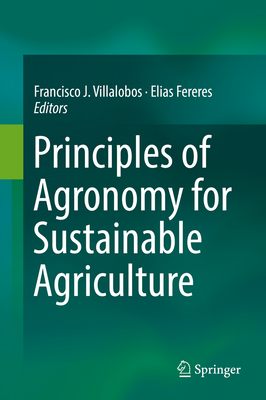
Principles of Agronomy for Sustainable Agriculture (Out of print)
| PUBLISHER | Springer (02/09/2017) |
| PRODUCT TYPE | Hardcover (Hardcover) |
This textbook explains the various aspects of sustainable agricultures to undergraduate and graduate students. The book first quantifies the components of the crop energy balance, i.e. the partitioning of net radiation, and their effect on the thermal environment of the canopy. The soil water balance and the quantification of its main component (evapotranspiration) are studied to determine the availability of water to rain fed crops and to calculate crop water requirements. Then it sets the limitations of crop production in relation to crop phenology, radiation interception and resource availability (e.g. nutrients). With that in mind the different agricultural techniques (sowing, tillage, irrigation, fertilization, harvest, application of pesticides, etc.) are analyzed with special emphasis in quantifying the inputs (sowing rates, fertilizer amounts, irrigation schedules, tillage plans) required for a given target yield under specific environmental conditions (soil & climate). For all techniques strategies are provided for improving the ratio productivity/resource use while ensuring sustainability. The book comes with online practical focusing on the key aspects of management in a crop rotation (collecting weather data, calculating productivity, sowing rates, irrigation programs, fertilizers rates etc).
This textbook explains the various aspects of sustainable agricultures to undergraduate and graduate students. The book first quantifies the components of the crop energy balance, i.e. the partitioning of net radiation, and their effect on the thermal environment of the canopy. The soil water balance and the quantification of its main component (evapotranspiration) are studied to determine the availability of water to rain fed crops and to calculate crop water requirements. Then it sets the limitations of crop production in relation to crop phenology, radiation interception and resource availability (e.g. nutrients). With that in mind the different agricultural techniques (sowing, tillage, irrigation, fertilization, harvest, application of pesticides, etc.) are analyzed with special emphasis in quantifying the inputs (sowing rates, fertilizer amounts, irrigation schedules, tillage plans) required for a given target yield under specific environmental conditions (soil & climate). For all techniques strategies are provided for improving the ratio productivity/resource use while ensuring sustainability. The book comes with online practical focusing on the key aspects of management in a crop rotation (collecting weather data, calculating productivity, sowing rates, irrigation programs, fertilizers rates etc).