
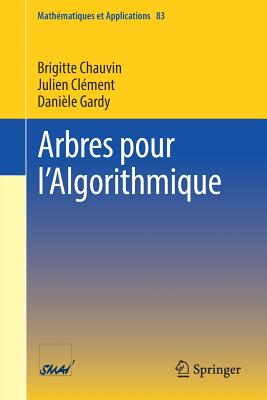
Arbres Pour l'Algorithmique
| AUTHOR | Gardy, Danile; Clment, Julien; Clement, Julien et al. |
| PUBLISHER | Springer (03/29/2019) |
| PRODUCT TYPE | Paperback (Paperback) |
Description
Cet ouvrage présente les types d'arbres les plus utilisés en informatique, sous les angles algorithmique et mathématique. Pour chaque type, nous donnons les algorithmes courants associés et des exemples d'utilisation, directe ou en modélisation, puis nous étudions leurs performances d'un point de vue mathématique. Nos outils sont les mathématiques discrètes, les probabilités et la combinatoire analytique, présentés ici simultanément.Le public visé est d'abord celui des étudiants de niveau master scientifique ou en dernière année d'école d'ingénieurs avec un cursus préalable en informatique ou en mathématiques, ou ceux visant une double compétence en mathématiques et informatique; ainsi que toute personne dotée d'un bagage scientifique minimal et amenée à utiliser des structures arborescentes liées à des algorithmes, qui souhaiterait avoir une meilleure connaissance de ces structures et une idée des performances des algorithmes associés sans se plonger dans les travaux originaux.
This book presents a wide range of tree structures, from both a computer science and a mathematical point of view. For each of these structures we give the algorithms that allow us to visit or update the structure, and discuss their potential uses, either directly (for storing data) or in modelling a variety of situations. We present a mathematical approach to their performances; this is done by the systematic and parallel use of tools from discrete mathematics, probability and analytic combinatorics.The book is intended for graduate students in mathematics or computer science (or both) and in engineering schools. It is also suitable for anyone with a basic level of scientific knowledge who may have to use tree structures and related algorithms, and who wishes to get a rigorous knowledge of their performance without going back to the original, often specialized, results.
This book presents a wide range of tree structures, from both a computer science and a mathematical point of view. For each of these structures we give the algorithms that allow us to visit or update the structure, and discuss their potential uses, either directly (for storing data) or in modelling a variety of situations. We present a mathematical approach to their performances; this is done by the systematic and parallel use of tools from discrete mathematics, probability and analytic combinatorics.The book is intended for graduate students in mathematics or computer science (or both) and in engineering schools. It is also suitable for anyone with a basic level of scientific knowledge who may have to use tree structures and related algorithms, and who wishes to get a rigorous knowledge of their performance without going back to the original, often specialized, results.
Show More
Product Format
Product Details
ISBN-13:
9783319937243
ISBN-10:
3319937243
Binding:
Paperback or Softback (Trade Paperback (Us))
Content Language:
French
More Product Details
Page Count:
513
Carton Quantity:
14
Product Dimensions:
6.14 x 1.11 x 9.21 inches
Weight:
1.67 pound(s)
Feature Codes:
Illustrated
Country of Origin:
NL
Subject Information
BISAC Categories
Mathematics | Applied
Mathematics | Data Science - Data Modeling & Design
Mathematics | Probability & Statistics - General
Dewey Decimal:
004.015
Descriptions, Reviews, Etc.
jacket back
Cet ouvrage prsente les types d'arbres les plus utiliss en informatique, sous les angles algorithmique et mathmatique. Pour chaque type, nous donnons les algorithmes courants associs et des exemples d'utilisation, directe ou en modlisation, puis nous tudions leurs performances d'un point de vue mathmatique. Nos outils sont les mathmatiques discrtes, les probabilits et la combinatoire analytique, prsents ici simultanment.Le public vis est d'abord celui des tudiants de niveau master scientifique ou en dernire anne d'cole d'ingnieurs avec un cursus pralable en informatique ou en mathmatiques, ou ceux visant une double comptence en mathmatiques et informatique; ainsi que toute personne dote d'un bagage scientifique minimal et amene utiliser des structures arborescentes lies des algorithmes, qui souhaiterait avoir une meilleure connaissance de ces structures et une ide des performances des algorithmes associs sans se plonger dans les travaux originaux.
This book presents a wide range of tree structures, from both a computer science and a mathematical point of view. For each of these structures we give the algorithms that allow to visit or update the structure, and discuss their potential uses, either directly (for storing data) or in modelling a variety of situations. We present a mathematical approach to their performances; this is done by the systematic and parallel use of tools from discrete mathematics, probability and analytic combinatorics.The book is intended for graduate students in mathematics or computer science (or both) and in engineering schools. It is also suitable for anyone with a basic level of scientific knowledge who may have to use tree structures and related algorithms, and who wishes to get a rigorous knowledge of their performance without going back to the original, often specialized, results.
This book presents a wide range of tree structures, from both a computer science and a mathematical point of view. For each of these structures we give the algorithms that allow to visit or update the structure, and discuss their potential uses, either directly (for storing data) or in modelling a variety of situations. We present a mathematical approach to their performances; this is done by the systematic and parallel use of tools from discrete mathematics, probability and analytic combinatorics.The book is intended for graduate students in mathematics or computer science (or both) and in engineering schools. It is also suitable for anyone with a basic level of scientific knowledge who may have to use tree structures and related algorithms, and who wishes to get a rigorous knowledge of their performance without going back to the original, often specialized, results.
Show More
publisher marketing
Cet ouvrage présente les types d'arbres les plus utilisés en informatique, sous les angles algorithmique et mathématique. Pour chaque type, nous donnons les algorithmes courants associés et des exemples d'utilisation, directe ou en modélisation, puis nous étudions leurs performances d'un point de vue mathématique. Nos outils sont les mathématiques discrètes, les probabilités et la combinatoire analytique, présentés ici simultanément.Le public visé est d'abord celui des étudiants de niveau master scientifique ou en dernière année d'école d'ingénieurs avec un cursus préalable en informatique ou en mathématiques, ou ceux visant une double compétence en mathématiques et informatique; ainsi que toute personne dotée d'un bagage scientifique minimal et amenée à utiliser des structures arborescentes liées à des algorithmes, qui souhaiterait avoir une meilleure connaissance de ces structures et une idée des performances des algorithmes associés sans se plonger dans les travaux originaux.
This book presents a wide range of tree structures, from both a computer science and a mathematical point of view. For each of these structures we give the algorithms that allow us to visit or update the structure, and discuss their potential uses, either directly (for storing data) or in modelling a variety of situations. We present a mathematical approach to their performances; this is done by the systematic and parallel use of tools from discrete mathematics, probability and analytic combinatorics.The book is intended for graduate students in mathematics or computer science (or both) and in engineering schools. It is also suitable for anyone with a basic level of scientific knowledge who may have to use tree structures and related algorithms, and who wishes to get a rigorous knowledge of their performance without going back to the original, often specialized, results.
This book presents a wide range of tree structures, from both a computer science and a mathematical point of view. For each of these structures we give the algorithms that allow us to visit or update the structure, and discuss their potential uses, either directly (for storing data) or in modelling a variety of situations. We present a mathematical approach to their performances; this is done by the systematic and parallel use of tools from discrete mathematics, probability and analytic combinatorics.The book is intended for graduate students in mathematics or computer science (or both) and in engineering schools. It is also suitable for anyone with a basic level of scientific knowledge who may have to use tree structures and related algorithms, and who wishes to get a rigorous knowledge of their performance without going back to the original, often specialized, results.
Show More
List Price $59.99
Your Price
$59.39