
Back to Search
ISBN 9783527310333 is out of print and is currently unavailable, alternate formats (if applicable) are shown below.
Available options are listed below:

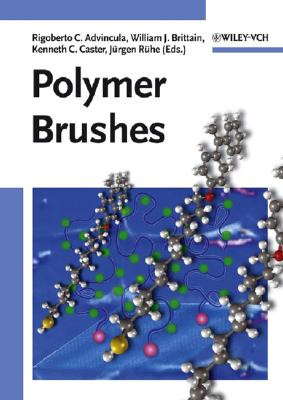
Polymer Brushes: Synthesis, Characterization and Applications (Out of print)

AUTHOR Advincula; Advincula; Advincula et al.
PUBLISHER Wiley-Vch (09/03/2004)
PRODUCT TYPE Hardcover (Hardcover)

Description
Mit Hilfe von Polymerbrsten (polymer brushes) lassen sich die Wechselwirkungseigenschaften polymerer Oberflchen gezielt modifizieren. In diesem Band werden zunchst theoretische Grundlagen, Synthesewege, Analyseverfahren und Materialien erlutert, die fr solche Systeme von Interesse sind. Anschlie end erhlt der Leser einen breit gefcherten berblick ber Einsatzmglichkeiten von polymer brushes in verschiedensten Bereichen und Ma stben - von funktionellen Anstrichen ber Kompositwerkstoffe, metallorganische Grenzflchen und Nanopartikel bis zu biologischen Anwendungen.
Show More
Product Format
Product Details
ISBN-13: 9783527310333
ISBN-10: 3527310339
Binding: Hardback or Cased Book (Sewn)
Content Language: English
More Product Details
Page Count: 501
Carton Quantity: 12
Product Dimensions: 6.69 x 1.13 x 9.61 inches
Weight: 2.21 pound(s)
Feature Codes: Bibliography, Index, Glossary, Illustrated
Country of Origin: DE
Subject Information
BISAC Categories
Technology & Engineering | Materials Science - General
Technology & Engineering | Chemical & Biochemical
Dewey Decimal: 620.192
Library of Congress Control Number: 2006436642
Descriptions, Reviews, Etc.
jacket back
Materials scientists, polymer chemists, surface physicists and materials engineers will find this book a complete and detailed treatise on the field of polymer brushes, their synthesis, characterization and manifold applications. In a first section, the various synthetic pathways and different surface materials are introduced and explained, followed by a second section covering important aspects of characterization and analysis in both flat surfaces and particles. These specific surface initiated polymerization (SIP) systems such as linear polymers, homopolymers, block copolymers, and hyperbranched polymers are unique compared to previously reported systems by chemisorption or physisorption. They have found their way in both large-scale and miniature applications of polymer brushes, which is covered in the last section. Such 'hairy' surfaces offer fascinating opportunities for addressing numerous problems of both academic and, in particular, industrial interest: high-quality, functional or protective coatings, composite materials, surface engineered particles, metal-organic interfaces, biological applications, micro-patterning, colloids, nanoparticles, functional devices, and many more. It is the desire of the authors that this book will be of benefit to readers who want to "brush-up on polymers".
Show More
publisher marketing
Mit Hilfe von Polymerbrsten (polymer brushes) lassen sich die Wechselwirkungseigenschaften polymerer Oberflchen gezielt modifizieren. In diesem Band werden zunchst theoretische Grundlagen, Synthesewege, Analyseverfahren und Materialien erlutert, die fr solche Systeme von Interesse sind. Anschlie end erhlt der Leser einen breit gefcherten berblick ber Einsatzmglichkeiten von polymer brushes in verschiedensten Bereichen und Ma stben - von funktionellen Anstrichen ber Kompositwerkstoffe, metallorganische Grenzflchen und Nanopartikel bis zu biologischen Anwendungen.
Show More

Editor: Advincula, Rigoberto C.
Rigoberto C. Advincula is currently Associate Professor at the Department of Chemistry of the University of Houston. He obtained his bachelor's degree from the University of the Philippines in 1987 and his PhD in Chemistry at the University of Florida seven years later.
He was Alexander von Humboldt Research Fellow at the Max Planck Institute for Polymer Research in 1995 and the following year a Research Fellow at the Department of Chemical Engineering, Stanford University. In 2003, Dr. Advincula was one of the recipients of the Arthur K. Doolittle Award given by the Polymer Materials Science and Engineering division of the American Chemical Society. His current research interests are in the area of organic and polymer materials as applied to nanoscale building blocks and phenomena, with applications focusing on electro-optical properties, biofunctional systems, and surface modifiers.

William J. Brittain is currently Professor at the University of Akron, Department of Polymer Science. He obtained his bachelor's degree from the University of Northern Colorado in 1977 and his PhD in Chemistry at the California Institute of Technology in 1982.

Kenneth C. Caster is currently Senior Research Scientist within the Center for Biologically Inspired Materials and Materials Systems at the Pratt School of Engineering, Duke University. He obtained his bachelor's degree from Stetson University in 1979 and his PhD in Chemistry from Duke University in 1983. He was a National Institutes of Health Postdoctoral Fellow at the University of Florida from 1983 to 1985, thereafter he spent 18 years in industrial R&D, first at Union Carbide Corporation in new product development and catalysisresearch, followed by 9 years at Lord Corporation, as principle investigator of new materials research in the Lord Materials Division. In 1998, Dr. Caster was joint-winner of the Lord Corporation Chemical Products Division Technical Achievement Award for innovation and development of Contact Metathesis Polymerization. He has extensive experience from basic R&D to process development, and his areas of expertise include ring-opening metathesis polymerization, organophosphorus chemistry, catalysis, ligand design and synthesis, heterocyclic chemistry, and small molecule molecular modeling.

Jurgen Ruhe has been Professor for Chemistry and Physics of Interfaces at the University of Freiburg since 1999 and since 2001 he is also director of the Institute for Microsystems Technology. Prior to this, he was associate professor at the Max-Planck-Institute for Polymer Research. He has been visiting scientist at the IBM Almaden Laboratories, at the RIKEN Institute in Tokyo, Japan, the Cavendish Laboratories of Physics, Stanford University and Georgia Institute for Technology. Professor Ruhe has won the prize for Chemistry awarded by the Academy of Sciences in Gottingen (1999) and the DECHEMA award 2001. His research interests are directed towards the development of new methods for the generation of tailor-made surfaces and the use of polymers in nanosciences and microsystems technology.

Show More
List Price $480.95
Your Price  $476.14
Hardcover